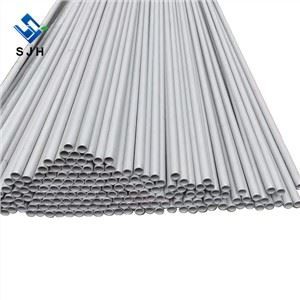
Titanium alloy tubes have gained significant popularity in various industries due to their exceptional properties. As a titanium alloy tube supplier, I am often asked about the formability properties of these tubes. In this blog post, I will delve into the key aspects of the formability of titanium alloy tubes, exploring the factors that influence it and the implications for different applications. Titanium Alloy Tube
Understanding Formability
Formability refers to the ability of a material to undergo plastic deformation without cracking or failing. For titanium alloy tubes, formability is crucial as it determines the ease with which the tubes can be shaped into various forms, such as bends, flanges, and expansions. Good formability allows for the production of complex geometries, which are often required in industries like aerospace, automotive, and medical.
Factors Affecting the Formability of Titanium Alloy Tubes
1. Alloy Composition
The composition of the titanium alloy plays a vital role in its formability. Different alloying elements are added to titanium to enhance specific properties. For example, alpha-beta titanium alloys, which contain both alpha and beta phases, generally offer better formability compared to alpha titanium alloys. The beta phase in these alloys provides greater ductility, allowing for more extensive deformation. Alloys like Ti-6Al-4V, one of the most commonly used titanium alloys, have a balanced composition that offers good formability along with high strength and corrosion resistance.
2. Microstructure
The microstructure of the titanium alloy tube is another critical factor. A fine-grained microstructure typically leads to better formability. Fine grains provide more grain boundaries, which can accommodate dislocations during deformation, reducing the likelihood of cracking. Heat treatment processes can be used to control the microstructure of the tubes. For instance, annealing can be employed to refine the grain size and improve the formability of the alloy.
3. Temperature
Temperature has a significant impact on the formability of titanium alloy tubes. Titanium alloys are more formable at elevated temperatures. At higher temperatures, the material’s yield strength decreases, and its ductility increases. This makes it easier to shape the tubes without causing damage. However, it is important to carefully control the temperature during forming processes to avoid overheating, which can lead to grain growth and a decrease in mechanical properties.
4. Strain Rate
The strain rate, which is the rate at which deformation occurs, also affects formability. Titanium alloy tubes generally have a better formability at lower strain rates. At high strain rates, the material may not have enough time to deform plastically, leading to cracking. Therefore, slow and controlled deformation processes are often preferred when working with titanium alloy tubes.
Forming Processes for Titanium Alloy Tubes
1. Bending
Bending is one of the most common forming processes for titanium alloy tubes. There are several methods for bending tubes, including rotary draw bending, mandrel bending, and roll bending. Rotary draw bending is suitable for producing precise bends with a small radius. Mandrel bending is used when a smooth inner surface is required, especially for applications where fluid flow is critical. Roll bending is ideal for producing large-radius bends.
2. Flanging
Flanging involves creating a flange at the end of the tube. This can be done using various techniques, such as hydraulic flanging or mechanical flanging. Flanging is often used to connect tubes to other components or to provide a sealing surface.
3. Expansion
Tube expansion is a process used to increase the diameter of the tube. This can be achieved through mechanical expansion or hydroforming. Hydroforming is a particularly effective method for expanding titanium alloy tubes as it can produce complex shapes with high precision.
Applications and the Importance of Formability
The formability of titanium alloy tubes is of great importance in many applications.
1. Aerospace Industry
In the aerospace industry, titanium alloy tubes are used in aircraft engines, hydraulic systems, and structural components. The ability to form these tubes into complex shapes is essential for meeting the design requirements of modern aircraft. For example, the tubes used in engine fuel systems need to be bent and shaped to fit into the tight spaces within the engine compartment.
2. Automotive Industry
In the automotive industry, titanium alloy tubes are used in exhaust systems, suspension components, and fuel lines. The formability of these tubes allows for the design of lightweight and high-performance components. For instance, the ability to form the tubes into complex bends helps in optimizing the exhaust flow and reducing backpressure.
3. Medical Industry
In the medical industry, titanium alloy tubes are used in surgical instruments, implants, and diagnostic equipment. The formability of these tubes is crucial for producing customized implants that fit the patient’s anatomy precisely. For example, spinal implants made from titanium alloy tubes need to be shaped to match the curvature of the spine.
Challenges in Forming Titanium Alloy Tubes
Despite their excellent formability, titanium alloy tubes also present some challenges during the forming process.
1. Springback
Springback is a common issue in tube forming. After the forming process, the tube tends to return to its original shape to some extent. This can make it difficult to achieve the desired shape and dimensions. To overcome springback, precise tooling and forming techniques need to be used.
2. Surface Quality
Maintaining good surface quality during the forming process is crucial, especially for applications where the tube’s surface is in contact with other components or fluids. Titanium alloy tubes are prone to surface damage during forming, such as scratches and galling. Special lubricants and surface treatments can be used to minimize these issues.
Conclusion

The formability properties of titanium alloy tubes are influenced by various factors, including alloy composition, microstructure, temperature, and strain rate. Understanding these factors is essential for successful tube forming processes. The ability to form titanium alloy tubes into complex shapes makes them suitable for a wide range of applications in industries such as aerospace, automotive, and medical.
Square Tube As a titanium alloy tube supplier, I am committed to providing high-quality tubes with excellent formability. Our experienced team can offer technical support and guidance to ensure that our customers can achieve the best results in their tube forming processes. If you are interested in purchasing titanium alloy tubes or have any questions about their formability, please feel free to contact us for a detailed discussion. We look forward to working with you to meet your specific requirements.
References
- Boyer, R. R., Welsch, G., & Collings, E. W. (1994). Materials Properties Handbook: Titanium Alloys. ASM International.
- Davies, C. J. (2008). Titanium: A Technical Guide. ASM International.
- Semiatin, S. L., & Stout, M. G. (2003). Forming of Titanium Alloys. ASM International.
Chengdu Shushengtai Steel Co., Ltd.
As one of the leading titanium alloy tube manufacturers and suppliers in China, our company is specialized in providing the best products and service for customers around the world. Please rest assured to buy high quality titanium alloy tube made in China here from our factory.
Address: Room 506, No. 288 Xingle Road, Xindu District, Chengdu City
E-mail: Julia@lyrfysteel.com
WebSite: https://www.lyrfy-steel.com/
