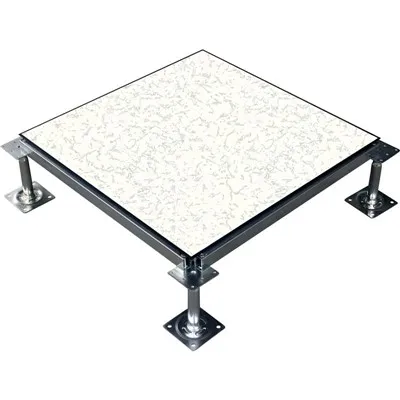
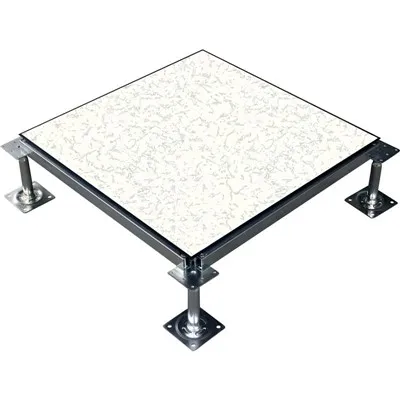
As a supplier of acoustic raised access floors, understanding how to measure the acoustic performance of these floors is crucial. It allows us to provide accurate information to our customers, ensure compliance with industry standards, and ultimately deliver high – quality products. In this blog, I will share my insights on the methods and considerations for measuring the acoustic performance of acoustic raised access floors. Acoustic Raised Access Floor
1. Understanding the Basics of Acoustic Performance
Before diving into the measurement techniques, it’s important to understand the key aspects of acoustic performance. Acoustic performance of an acoustic raised access floor is mainly characterized by two factors: sound insulation and sound absorption.
Sound insulation refers to the ability of the floor to prevent sound from passing through it. This is particularly important in environments where noise needs to be contained, such as offices, data centers, and residential buildings. A good acoustic raised access floor should have a high sound insulation rating to minimize the transmission of airborne and impact noises.
Sound absorption, on the other hand, is about reducing the reflection of sound within a space. When sound waves hit a surface, they can either be reflected, absorbed, or transmitted. An acoustic raised access floor with high sound absorption properties can help to reduce reverberation and improve the overall acoustic quality of a room.
2. Measuring Sound Insulation
2.1 Laboratory Testing
The most accurate way to measure the sound insulation of an acoustic raised access floor is through laboratory testing. This typically involves using a sound insulation test chamber, which is a specialized room designed to isolate the test specimen from external noise.
The test specimen, in this case, the acoustic raised access floor, is installed in the chamber. A sound source is then placed on one side of the floor, and the sound level is measured on the other side. The difference in sound levels between the two sides is used to calculate the sound insulation performance of the floor.
The results of the laboratory test are usually expressed in terms of the Sound Transmission Class (STC) or the Weighted Sound Reduction Index (Rw). The STC is a single – number rating that represents the overall sound insulation performance of a material or structure. The higher the STC value, the better the sound insulation.
2.2 Field Testing
In some cases, field testing may be required to measure the sound insulation of an acoustic raised access floor in a real – world environment. Field testing is more complex than laboratory testing because it is affected by many factors, such as the surrounding environment, the installation quality of the floor, and the presence of other building elements.
To conduct field testing, a sound source is placed in one room, and the sound level is measured in an adjacent room. The difference in sound levels between the two rooms is used to calculate the sound insulation performance of the floor. However, it’s important to note that field test results may not be as accurate as laboratory test results due to the influence of external factors.
3. Measuring Sound Absorption
3.1 Reverberation Time Measurement
One of the most common methods for measuring sound absorption is by measuring the reverberation time of a room. Reverberation time is the time it takes for the sound level in a room to decay by 60 decibels after the sound source has stopped.
To measure the reverberation time, a sound source is used to generate a short, intense sound in the room. The decay of the sound is then measured using a sound level meter. The reverberation time is calculated based on the measured decay curve.
A lower reverberation time indicates better sound absorption. The acoustic performance of the raised access floor can be evaluated by comparing the reverberation time before and after the installation of the floor.
3.2 Absorption Coefficient Measurement
The absorption coefficient is another important parameter for measuring sound absorption. It represents the proportion of sound energy that is absorbed by a material or surface.
The absorption coefficient can be measured using a reverberation chamber or an impedance tube. In a reverberation chamber, the test specimen is placed in the chamber, and the reverberation time is measured with and without the specimen. The absorption coefficient is then calculated based on the difference in reverberation times.
In an impedance tube, a sound wave is sent through the tube, and the reflection and transmission of the sound wave are measured. The absorption coefficient is calculated based on the measured reflection and transmission coefficients.
4. Factors Affecting Acoustic Performance
Several factors can affect the acoustic performance of an acoustic raised access floor. These factors need to be considered during the measurement process to ensure accurate results.
4.1 Floor Construction
The construction of the acoustic raised access floor, including the type of panel, the core material, and the support structure, can have a significant impact on its acoustic performance. For example, floors with a dense core material tend to have better sound insulation properties, while floors with a porous surface can improve sound absorption.
4.2 Installation Quality
The installation quality of the acoustic raised access floor is also crucial. A poorly installed floor may have gaps or joints that can allow sound to pass through, reducing its sound insulation performance. It’s important to ensure that the floor is installed correctly according to the manufacturer’s instructions.
4.3 Surrounding Environment
The surrounding environment, such as the presence of other building elements, the size and shape of the room, and the background noise level, can affect the acoustic performance of the floor. For example, a room with hard, reflective surfaces may have a higher reverberation time, which can make it more difficult to accurately measure the sound absorption of the floor.
5. Importance of Accurate Measurement
Accurate measurement of the acoustic performance of an acoustic raised access floor is essential for several reasons.
Firstly, it allows us to provide accurate information to our customers. Customers rely on this information to make informed decisions about the suitability of the floor for their specific applications. By providing accurate acoustic performance data, we can build trust with our customers and ensure that they are satisfied with our products.
Secondly, accurate measurement helps us to ensure compliance with industry standards. Many industries have specific acoustic requirements, and our products need to meet these standards to be used in certain applications. By measuring the acoustic performance of our floors, we can ensure that they meet the relevant standards and regulations.
Finally, accurate measurement allows us to continuously improve our products. By analyzing the measurement results, we can identify areas for improvement and make necessary adjustments to the design and construction of our acoustic raised access floors.
6. Conclusion
Measuring the acoustic performance of an acoustic raised access floor is a complex but essential process. By understanding the key aspects of acoustic performance, using appropriate measurement techniques, and considering the factors that affect performance, we can ensure that our products meet the highest standards of quality and performance.
Raised Access Flooring If you are interested in purchasing acoustic raised access floors and would like to learn more about their acoustic performance, please feel free to contact us for a detailed discussion. We are committed to providing you with the best – quality products and professional advice to meet your specific needs.
References
- Beranek, Leo L. Acoustics. American Institute of Physics, 1986.
- Kryter, Karl D. The Handbook of Noise Control. CRC Press, 2005.
- ISO 140 – 1: 1997. Acoustics – Measurement of sound insulation in buildings and of building elements – Part 1: Requirements for laboratory test facilities.
- ASTM E90 – 16. Standard Test Method for Laboratory Measurement of Airborne Sound Transmission Loss of Building Partitions and Elements.
Fineco Tech Co., Ltd.
As one of the most professional acoustic raised access floor manufacturers and suppliers in China, we’re featured by quality products and good service. Welcome to wholesale customized acoustic raised access floor made in China here from our factory. If you have any enquiry about cooperation, please feel free to email us.
Address: Wuyue Square, Wujin District, Changzhou, Jiangsu, China
E-mail: info@finecotech.com
WebSite: https://www.finecoglobal.com/
