Hey there, fellow gamers! If you’re like me, you’re always on the hunt for ways to level up your gaming experience. And let me tell you, one of the most crucial, yet often overlooked, components of a high – performance gaming PC is the power supply. As a power supplies supplier, I’ve seen firsthand how a proper power supply can make or break your gaming setup. So, let’s dive into what power supply requirements you need for a gaming PC. Power Supplies

Why Power Supply Matters
First off, why does the power supply even matter? A power supply is basically the heart of your PC. It’s responsible for converting the AC power from your wall outlet into the DC power that your PC components need. Without a reliable power supply, you could experience all kinds of issues. Your PC might randomly shut down, components could malfunction, or in the worst – case scenario, you could even damage expensive hardware.
For gamers, a stable power supply is even more critical. Gaming PCs are often loaded with high – end components like powerful CPUs and GPUs that draw a significant amount of power. If your power supply can’t keep up, you’re going to face performance drops during intense gaming sessions.
Components that Determine Power Requirements
Let’s talk about the main components that influence how much power your gaming PC will need.
CPU (Central Processing Unit)
The CPU is like the brain of your PC. Modern gaming CPUs are designed to handle complex calculations at high speeds. High – end CPUs, especially those with multiple cores and high clock speeds, can draw a lot of power. For example, an Intel Core i9 or AMD Ryzen 9 can consume well over 100 watts under heavy load. When your PC is running game – intensive processes, the CPU has to work overtime, which means more power is needed.
GPU (Graphics Processing Unit)
The GPU is hands – down the most power – hungry component in a gaming PC. It’s responsible for rendering all those beautiful graphics you see in games. High – end GPUs like the NVIDIA GeForce RTX 40 series or AMD Radeon RX 7000 series can draw several hundred watts. Some of the top – of – the – line GPUs might need 400 watts or more when they’re pushing out 4K resolutions and high frame rates.
Other Components
It’s not just the CPU and GPU that need power. You also have your motherboard, RAM, storage drives (SSD or HDD), and cooling fans. Motherboards usually consume around 20 – 50 watts, depending on the features. RAM doesn’t take up much power, usually just a few watts per stick. Storage drives, especially SSDs, are relatively power – efficient, using only a few watts. Cooling fans also add to the power consumption. If you have an elaborate liquid – cooling system, it will draw more power compared to simple air – cooling.
Calculating Your Power Supply Needs
So, how do you figure out how much power your gaming PC actually needs? There are a few ways.
Online Calculators
There are plenty of online power supply calculators available. You just input details about your PC components, like the CPU model, GPU model, the number of RAM sticks, and the type of storage drives. These calculators will then give you an estimate of how much power your PC will draw. They’re a great starting point, but keep in mind they’re just estimates.
Manual Calculation
If you’re a bit more tech – savvy, you can do a manual calculation. Look up the power consumption of each component from the manufacturer’s specifications. Then, add them all up. It’s a bit more time – consuming, but it can give you a more accurate picture, especially if you have some non – standard components in your PC.
Recommended Power Supply Wattages
Now, let’s talk about recommended wattages for different types of gaming PCs.
Entry – Level Gaming PC
If you’re building an entry – level gaming PC, you might be using a mid – range CPU and GPU. For example, an Intel Core i5 or AMD Ryzen 5 CPU and a NVIDIA GeForce GTX 16 series or AMD Radeon RX 5000 series GPU. In this case, a power supply in the 450 – 550 watt range should be sufficient. This will give you enough power for your components and a little bit of headroom for future upgrades.
Mid – Range Gaming PC
Mid – range gaming PCs usually have more powerful CPUs and GPUs. You might be looking at an Intel Core i7 or AMD Ryzen 7 CPU and a NVIDIA GeForce RTX 30 series or AMD Radeon RX 6000 series GPU. For these setups, a power supply with 650 – 750 watts is recommended. This extra wattage ensures that your components can operate at their best, even during demanding games.
High – End Gaming PC
If you’re going all out with a high – end gaming PC, featuring top – of – the – line CPUs like the Intel Core i9 or AMD Ryzen 9 and high – end GPUs like the NVIDIA GeForce RTX 40 series or AMD Radeon RX 7000 series, you’ll need a power supply of 850 watts or more. These high – end components draw a ton of power, especially when overclocked, so you need a power supply that can handle it.
Other Considerations for Power Supplies
Efficiency Rating
The efficiency rating of a power supply is really important. It’s usually denoted by labels like 80 Plus, 80 Plus Bronze, 80 Plus Silver, etc. A higher efficiency rating means that the power supply wastes less energy as heat. For example, an 80 Plus Gold power supply is more efficient than an 80 Plus Bronze one. Over time, a more efficient power supply can save you money on your electricity bills.
Modular vs. Non – Modular
Power supplies come in modular and non – modular types. A non – modular power supply has all the cables permanently attached. This can make it a bit messy to install, especially if you don’t need all the cables. A modular power supply, on the other hand, allows you to connect only the cables you need. This makes for a cleaner and more organized PC build.
Brand and Quality
Don’t skimp on the brand and quality of your power supply. A cheap power supply might seem like a good deal at first, but it can cause more problems in the long run. Look for well – known brands with good reviews. A quality power supply will be more reliable, have better protection features, and last longer.
Connect with Me for Your Power Supply needs
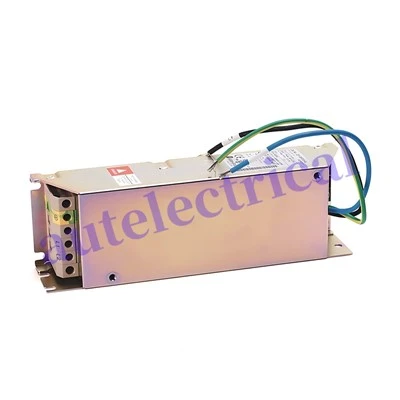
Alright, so now you know what power supply requirements you need for your gaming PC. If you’re in the market for a new power supply, I’m here to help. As a power supplies supplier, I have a wide range of power supplies to suit different needs and budgets. Whether you’re building an entry – level gaming PC or a high – end rig, I’ve got you covered.
I/O Modules & Communication If you have any questions or want to discuss your specific requirements, feel free to reach out. We can talk about the best power supply options for your gaming setup, and I’ll do my best to offer you a great deal. Let’s work together to make your gaming PC run at its best!
References
- AnandTech – Various hardware reviews and power consumption data
- Tom’s Hardware – Articles on PC power supplies and component power requirements
- Manufacturer datasheets for CPU, GPU, and other PC components
Xiamen Shengcheng Automation Co., Ltd.
As one of the most professional power supplies suppliers in China, we offer a wide range of products with superior quality. Please rest assured to buy bulk discount power supplies from our factory. For price consultation, contact us.
Address: Room 1104, Building A, No.1 Golden Bay Fortune Center, No. 999, Anling Road, Heshan Street, Huli District, Xiamen City, Fujian Province, China
E-mail: sales@cn2014.com
WebSite: https://www.autelectrical.com/
