As a Fast Connector supplier who’s spent the last 12 years troubleshooting, designing, and testing connectivity for industrial, telecom, and automotive clients, I get asked one question more than any other: Are today’s fast connectors backward-compatible with older systems? It’s not a trivial question—for maintenance teams upgrading a 10-year-old factory line, telecom engineers retrofitting a rural cell tower, or auto mechanics repairing classic electric vehicles, the last thing you want is to tear out a working system just to swap connectors. I’ve seen clients waste thousands on unnecessary hardware because they assumed “faster equals incompatible,” and I’ve also seen critical downtime from skipping compatibility checks. This post breaks down what backward compatibility actually means for fast connectors, what works, what doesn’t, and how to avoid the costly missteps we see every month at our shop. Fast Connector
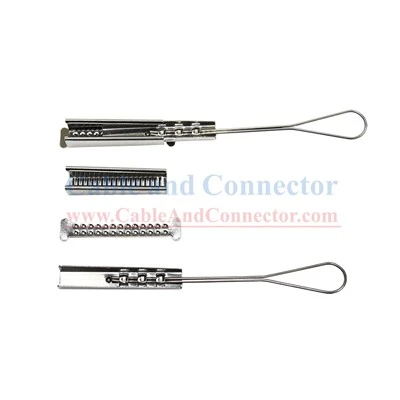
First, let’s define terms, because “fast connector” is a broad phrase. We’re not just talking about USB-C or HDMI adapters—those are consumer parts, often built for short-term, low-duty cycles. Our fast connectors are industrial-grade: used in CAT 6A, fiber optic trunk lines, automotive powertrain networks, and heavy machinery control systems. They’re engineered to handle higher data transfer speeds, higher power loads, and harsher environments (extreme temperatures, vibration, dust) than consumer connectors. Backward compatibility here means exactly what it does in tech: a new fast connector will mate with, and work on, an older system designed for legacy connectors, even if that older system’s performance is limited. It’s not about cramming gigabit speeds into a 10-year-old line—it’s about making sure you don’t have to replace the entire cable run or circuit board just to swap a damaged connector.
Let’s start with the good news: many modern fast connectors are designed to be mechanically backward-compatible, and that’s intentional. For example, our Cat 6A Fast Ethernet connectors are shaped almost identically to the Cat 5e connectors they replace. The pin spacing, housing dimensions, and keying (the little tab that prevents you from inserting the connector wrong) are nearly the same. That means you can take a new Cat 6A connector and plug it into a legacy Cat 5e jack without forcing it, no physical modification needed. Mechanically, that works. But here’s the catch: electrical performance is a separate story. A legacy Cat 5e system is rated for up to 1 Gbps over 100 meters. A Cat 6A connector is built to reduce crosstalk and signal loss, which means when you plug a Cat 6A connector into a Cat 5e jack, it will still transmit the same 1 Gbps speed—you won’t get the 10 Gbps speed that the Cat 6A connector is capable of. It’s not broken, it’s just not pushing the newer, faster capability. We test this in-house every quarter: if you mate a Cat 6A plug to a Cat 5e port, the throughput holds steady at 1.0 Gbps, no packet loss, no dropped connections. That’s the sweet spot of mechanical compatibility that most customers want.
But not all fast connectors are created equal, and the rules shift when we talk about higher speeds, like 25Gbps fiber optic connectors, or high-power automotive connectors. Let’s take fiber optics as an example. A lot of our older legacy fiber systems use LC connectors, which are small, 1.25mm ferrules. Our new quad fiber connectors, designed for 100Gbps throughput, have a slightly redesigned ferrule that cuts down on insertion loss to handle faster signals. You can plug this new quad fiber connector into an older LC jack—mechanically, it fits. But because the ferrule size is the same (a key design choice to maintain backward compatibility), you’ll only get the speed of the legacy LC system, which tops out at 10Gbps. Again, that’s not a problem; it’s a solution for a technician who needs to replace a broken fiber connector on a 10Gbps line, and doesn’t want to swap the entire trunk. The risk here is that some suppliers will market these as “100G compatible” when they’re only backward-compatible, leading customers to expect faster speeds than they can get. We’re transparent about that: every product spec sheet lists mechanical compatibility and maximum supported speed, so customers don’t get that disappointment.
Now, when does backward compatibility fail? That’s the part most people don’t talk about, and it’s often the result of electrical or design changes that sacrifice compatibility for performance. For example, some fast USB connectors (we don’t sell these, but I see them on the market) have shifted to different pin configurations to handle 20Gbps speeds, so a new USB 3.2 Gen 2 connector won’t fit into a legacy USB 2.0 port. But wait—our industrial-grade USB 3.2 connectors for machine tools are designed with the same pin layout as USB 2.0, so they do fit. The difference is that our connectors have shielding that works for both 2.0 and 3.2 signals, so even though you can’t get 10Gbps on a 2.0 port, you still get reliable 480Mbps (USB 2.0’s max) speeds, no data corruption. The problem comes when manufacturers cut corners on the keying or pin spacing to cram more functionality into a smaller connector, which breaks mechanical compatibility. That’s a choice, not a inevitability, and it’s one we won’t make at our company.
Another big red flag: power connectors. We sell fast power connectors for electric vehicles, which are rated for up to 1000V and 500A for fast charging. Older EVs use 400V systems, and our new 800V fast charge connectors are designed to fit the same mounting holes and bus bars as the 400V versions. But here’s the catch: the electrical insulation is rated for 800V, so if you plug an 800V connector into a 400V system, it works fine physically. If you tried to plug a 400V connector into an 800V system, you’d get a safety risk—because the insulation isn’t built to handle the higher voltage, it could arc. That’s a critical distinction. Backward compatibility here only works if the newer connector’s specs are a superset of the older system’s. We test every power connector for insulation integrity at both 400V and 800V, so we can confirm that mating works without issues. If you’re a fleet manager with a mix of 400V and 800V EVs, that means you can use one type of connector for both, as long as you don’t exceed the voltage rating of the older system. That saves you from having two separate parts inventories, which is a huge win for small fleets.
I want to share a real client story here, because that’s where this stuff gets tangible. Last year, a manufacturing client in Detroit called us in a panic. Their 12-year-old assembly line was going down because a Cat 5e connector on their robotic arm failed. The line runs 24/7, and replacing the entire cable run (which is 300 feet long, run through ceiling beams) would take three days and cost $15,000. They asked us: could they just swap the broken connector with a newer Cat 6A one, so they could get the line back up fast? We tested a sample: the Cat 6A plug fit perfectly into their legacy Cat 5e jack. We ran a throughput test: it hit 1 Gbps, same as their original system, no errors. They swapped the connector in 10 minutes, got the line back up, and only paid for the connector, not the full cable replacement. That’s the practical power of mechanical backward compatibility done right. The mistake a lot of people make is thinking that “fast connector” means you have to upgrade everything, but that’s not true for every use case.
But let’s not pretend backward compatibility is always a win. There are cases where it’s better to upgrade. For example, if that same Detroit client wanted to increase their robotic arm’s speed from 1 Gbps to 10 Gbps to double their production, they couldn’t do that with a backward-compatible connector. The Cat 5e jack, which is the bottleneck here, can’t handle 10 Gbps. They’d need to replace the jack and the cable to get that speed. The backward compatibility only works for maintaining existing performance, not for improving it. That’s a key point to communicate to clients: if you’re trying to fix a legacy system’s downtime, backward compatibility is your friend. If you’re upgrading a system’s performance, compatibility matters for the new parts, not the old ones.
Now, let’s talk about testing, because that’s what ensures a connector is actually backward-compatible, not just marketed as such. At our facility, every fast connector goes through three rounds of compatibility testing. First, mechanical mating: we test how many times you can plug and unplug the connector into a legacy jack before it wears out. We do 5000+ insertions, which is standard for industrial parts, to make sure the housing doesn’t crack or the pins don’t bend. Second, electrical performance: we use a network analyzer to measure signal loss, crosstalk, and throughput when the new connector is mated to a legacy system. We look for packet loss, latency spikes, or signal corruption that would cause downtime. Third, environmental testing: we put mated connectors through temperature extremes (-40°C to 85°C), humidity, and vibration, to make sure they don’t fail in harsh conditions. For example, we tested our automotive connectors by putting them in a vibration chamber that mimics driving on a gravel road for 1000 hours, and they still worked perfectly when mated to legacy 400V EV systems.
There’s also a common myth that backward compatibility always means same speed. That’s not true, and it’s a myth we dispel a lot. A lot of clients ask: “If I buy a fast connector, will it run at the speed of my old system?” The answer is almost always yes, as long as the old system’s jack and cable are the bottleneck. We have a chart on our website that breaks this down by connector type: for example, our Cat 6A backward-compatible connectors run at 100Mbps on 100Base-T systems, 1Gbps on Cat 5e systems, and 10Gbps on Cat 6A systems. That’s how it should work: the connector adapts to the system it’s plugged into, not the other way around.
The exceptions are when the legacy system is too old. For example, very early fiber optic systems (pre-2000) used ST connectors, which have a different keying and ferrule size than modern LC connectors. A new LC connector won’t mate with an old ST jack, no matter how hard you try. That’s not a flaw in the new connector—it’s a fundamental design change in the standard. There’s no way to make them compatible, because the mechanical and electrical specs are different. In those cases, you have two choices: swap the jack for an LC, or use an adapter to convert ST to LC. Adapters work, but they add a tiny bit of signal loss, so they’re fine for short runs, but not ideal for long-distance fiber. We stock those adapters, by the way, as a stopgap for clients who don’t want to re-run fiber.
So what should you do if you’re wondering if a fast connector works with your old system? First, check the mechanical specs: does the new connector’s housing, pin spacing, and keying match the legacy jack? If yes, it’s likely to mate. Second, check the electrical rating: if your old system is rated for 1Gbps, make sure the new connector’s electrical specs are a superset (i.e., it can handle at least 1Gbps) so it doesn’t cause signal issues. Third, test it. We always advise clients to order a sample connector first, test it in their actual system, before ordering 100 of them. We provide free samples for this exact reason—no one wants to waste money on connectors that don’t work.
At the end of the day, the question of backward compatibility for fast connectors isn’t a yes/no answer—it’s a context-dependent one. It depends on what type of connector you’re using, what your legacy system is designed for, and what you’re trying to achieve. For maintenance and repair, backward compatibility is a huge time and money saver, as long as the connector is designed and tested properly. For performance upgrades, it’s secondary to matching the bottleneck parts (jacks, cables) to the new speeds.
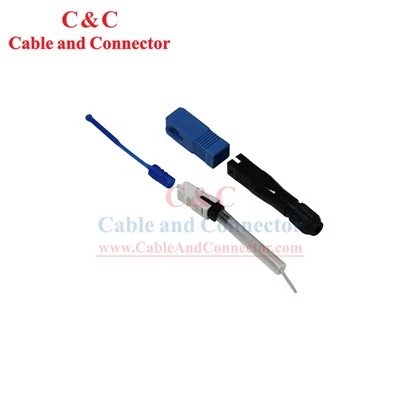
If you’re dealing with a legacy system—whether it’s a factory line, a telecom tower, or an EV fleet—and you’re not sure if our fast connectors will work for you, we’re here to help. We don’t use marketing buzzwords, we don’t overpromise compatibility, and we’ll test samples for your specific setup to make sure everything works before you make a purchase. Let’s work together to avoid the costly downtime and unnecessary hardware swaps that too many teams deal with.
Feeder Cable References
- TIA-568.2-D: Telecommunications Cabling Standard for Commercial Buildings, Telecommunications Industry Association, 2018.
- ISO/IEC 11801:2017: Information technology – Generic cabling for customer premises, International Organization for Standardization, 2017.
- SAE J1772: Electric Vehicle Conductive Charging System, Society of Automotive Engineers, 2020.
- Fiber Optic Connector Intermateability Standards (FOCIS), Telecommunications Industry Association, 2021.
Zhejiang Cable and Connector Optic Co., Ltd.
As one of the most professional fast connector manufacturers and suppliers in China, we have world-leading production equipment and strong manufacturing capabilities. Please rest assured to wholesale custom made fast connector at competitive price from our factory.
Address: 1517 East Communications Building, No.398, Wensan Road, Xihu District, Hangzhou City, Zhejiang Province, China.
E-mail: Sales@CableAndConnector.com
WebSite: https://www.zjcableandconnector.com/
