What is the Pressure Drop in an Air Cooled Condenser? Air Cooled Condenser
As someone who’s spent the better part of two decades in the air cooled condenser (ACC) game—first on the fabrication floor, now as part of a team that works directly with power plants, process facilities, and industrial HVAC specialists—I can tell you this question comes up at least once a week. Sometimes it’s from a young engineer in their first role, deep in the throes of a system design and staring at a set of calculation sheets that don’t quite add up. Other times it’s from a plant manager calling because their ACC is underperforming, and pressure drop is the culprit they can’t quite pin down. The truth is, pressure drop in an air cooled condenser isn’t just a number on a spec sheet—it’s the backbone of how well your entire heat rejection system works. Get it wrong, and you’re looking at higher energy bills, lost production, and even premature equipment failure. Let’s break it down, not with the stuffy textbook jargon that makes people zone out, but with the kind of practical, on-the-ground knowledge we’ve built solving problems for real facilities.
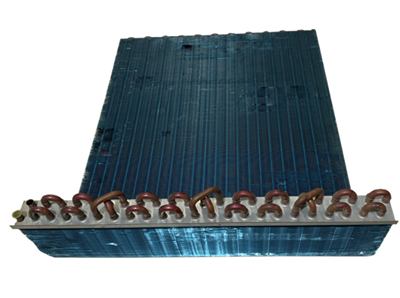
First, let’s start with the basics. An air cooled condenser’s job is simple: take superheated vapor (usually steam from a power plant turbine, or process vapor from a chemical or manufacturing plant) and turn it back into a liquid, using ambient air blowing across finned tubes to carry away the heat. Pressure drop, in this context, is the difference in air pressure between the inlet side of the ACC (where ambient air is pulled in or pushed across the tube bundle) and the outlet side (where that heated air exits). It’s caused by two main things: friction as air flows over the finned tubes, turns around flow diverters, and passes through any obstructions in the bundle, and turbulence from uneven air distribution or overcrowded tube spacing.
What most people don’t realize is that pressure drop is a double-edged sword. You want enough air flow through the bundle to condense the vapor efficiently, but every extra pascal (or inch of water column, the unit we use most often in the field) of pressure drop means your fan system has to work harder. For example, if your ACC has a pressure drop of 0.2 inches of water column (in wc) at design flow, and you have to bump that up to 0.4 in wc because of fouling or poorly spaced tubes, your fan motor might be drawing 20-30% more power just to move the same amount of air. That’s wasted energy, month after month, which adds up to tens of thousands of dollars a year for a typical 500 MW power plant.
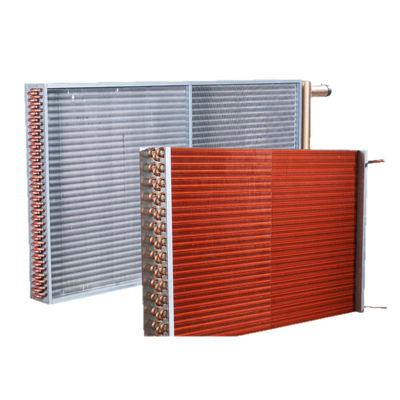
Let’s talk about what factors actually influence pressure drop, because this is where a lot of designs go off the rails. The first is the geometry of the tube bundle. The spacing between finned tubes, the fin height, fin thickness, and even the number of rows in the bundle all play a role. We’ve seen designs where engineers crammed too many tubes into a small footprint to save on material costs, only to end up with pressure drop 50% higher than expected. Why? Because the tight spacing means air has to squeeze through narrower gaps, creating more friction and turbulence. Conversely, if you space tubes too far apart, you lose heat transfer efficiency—there’s not enough surface area in a given space to cool the vapor. It’s a balancing act, and that’s where our team at [our company name] really shines; we don’t just sell standard ACCs, we size each bundle based on the specific vapor flow rate, ambient conditions, and fan system a customer has.
Next is air flow velocity. This is one of the most overlooked variables, especially in older plants upgrading their ACCs. Pressure drop increases with the square of air velocity, so if you double the speed your fans are pushing air, pressure drop quadruples. That’s a huge relationship. Let me give you a real example from a coal-fired power plant we worked on in Ohio a few years back. They’d upgraded their old ACC fans to higher horsepower models without adjusting the tube bundle, thinking more air flow would fix their overheating issues. Instead, pressure shot up from 0.22 in wc to 0.58 in wc. The fans were now drawing 35% more power, and the additional turbulence was causing fin erosion on the back rows of tubes. We worked with them to adjust the fan blade pitch and add flow straighteners to the bundle, bringing velocity down just enough to cut pressure drop by 40% while still maintaining the required air flow for condensation. That upgrade saved them over $120,000 a year in energy costs—all because we understood how velocity impacts pressure drop.
Another factor is fouling. Over time, ACC tubes get dirty—dust, pollen, bird droppings, and even industrial particulate build up on the fins and tubes, creating a layer that restricts air flow. That’s not just a heat transfer issue; it also increases pressure drop. We had a customer in Texas who didn’t clean their ACC for three years. Their pressure drop had risen 60% from the original design, and their power plant’s heat rate had jumped by 8%. When we did a full inspection, we found that the fins on the front row were caked in so much dust that air could barely get through the bundle. A thorough water jet cleaning brought pressure drop back to within 5% of design, and they’ve been doing quarterly cleanings since to keep it that way. It’s a simple maintenance step, but it’s often ignored until pressure drop becomes a major problem.
Now, let’s get into how we measure pressure drop in the field, because spec sheets don’t always tell the whole story. The most common tool we use is a digital manometer, which can measure the pressure difference between two points in the air stream. When we test an ACC, we take readings at the inlet (usually 2-3 feet upstream of the bundle to avoid fan turbulence) and at the outlet (6-12 feet downstream, where the air has settled) across several sections of the bundle. We don’t just take a single reading, either—air distribution is rarely even across the entire bundle. Sections near the fan center will have higher velocity and higher pressure drop, while sections near the edges might have lower flow and drop. If a bundle has uneven pressure drop, that means some parts are getting too much air (wasting energy) and some too little (causing poor condensation). That’s a red flag that either the fan system is misaligned or the bundle needs adjustment.
One question we get a lot is: what’s a “normal” pressure drop for an air cooled condenser? The answer is, it depends on the application and design, but typically we see values between 0.15 and 0.5 in wc for most industrial ACCs at design flow. For smaller HVAC-style ACCs used in commercial buildings, it might be lower, around 0.05 to 0.2 in wc. If you’re seeing pressure drop above that range at normal operating conditions, that’s a sign something’s wrong—either fouling, poor air distribution, or a mismatch between the fan and the bundle. On the flip side, if pressure drop is significantly lower than design, that could mean you’re not moving enough air, which would lead to higher condensing temperatures and lower overall system efficiency.
Let’s talk about the impact of pressure drop on the entire system, because it’s not an isolated issue. For power plants, condensing temperature is directly tied to turbine performance. If your ACC’s pressure drop is too high, condensing pressure goes up (because air can’t move through the bundle to carry away heat), which raises condensing temperature. A 1°C rise in condensing temperature can reduce a steam turbine’s output by about 1-2%, which for a 500 MW plant is 5-10 MW of lost power—enough to power 7,000-14,000 homes. Multiply that by the number of hours a plant operates in a year, and you’re looking at millions in lost revenue. For process facilities, higher condensing pressure can mean lower product purity, higher utility costs, and even downtime if the system can’t keep up with demand.
So, what can you do if you’re dealing with high pressure drop in your ACC? First, do a thorough inspection. Check for fouling on the fins and tubes—cleaning is often the quickest fix. Next, test air flow across the bundle to see if it’s evenly distributed. If the fan blades are worn or misaligned, replacing them or adjusting their pitch can help reduce turbulence. If the bundle is old and poorly designed, you might look at retrofitting with new, high-efficiency fins that reduce pressure drop while increasing heat transfer. Our team has done dozens of retrofits like this, replacing outdated fin designs with ones that have curved edges to smooth air flow, cutting pressure drop by 25-30% in some cases.
If you’re designing a new ACC, the key is to work with a supplier who understands the interplay between pressure drop, heat transfer, and fan power. A lot of suppliers will just size the bundle for heat duty without considering pressure drop, leading to expensive operational issues down the line. At [our company], we run detailed computational fluid dynamics (CFD) simulations for every ACC we design. These models let us map air flow across the entire bundle, calculate pressure drop at different operating conditions, and adjust geometry to minimize turbulence and friction. We also work with our customers to select fan systems that are matched to the bundle’s pressure drop, so they’re not overpaying for fan power or underpowered to move enough air.
I want to be clear: pressure drop isn’t something to fear, but it’s something to understand. Too many facility managers focus only on heat transfer, ignoring the energy costs associated with moving air through the ACC. We’ve had customers come to us after years of losing money because they didn’t realize a small adjustment to pressure drop could save them six figures a year. That’s why we always walk through every step with a customer, from initial design to ongoing maintenance, to make sure their ACC is operating at peak efficiency.
If you’re dealing with an underperforming air cooled condenser, or you’re designing a new system and want to get the pressure drop right the first time, don’t hesitate to reach out. Our team has decades of experience solving these exact problems, and we can help you navigate every step—from testing existing pressure drop to designing a custom ACC that fits your needs. There’s no one-size-fits-all solution, but there’s always a way to optimize for efficiency, reduce energy costs, and keep your system running smoothly.
Finned Tube References
ASHRAE. (2020). HVAC Applications Handbook. American Society of Heating, Refrigerating and Air-Conditioning Engineers.
Cheng, X., et al. (2018). Pressure Drop and Heat Transfer Performance of Finned Tube Banks for Air Cooled Condensers. International Journal of Heat and Mass Transfer, 127, 1122-1131.
Power Plant Engineering. (2021). Optimizing Air Cooled Condenser Performance. PennWell Corporation.
Xiangshui Derkang Refrigeration Equipment Co., Ltd.
Address: No. 2, Xiaojian Town Entrepreneurship Park, Xiangshui County
E-mail: 505745223@qq.com
WebSite: https://www.xsderk.com/
