Hey folks, let’s cut the crap – if you’ve ever stared at a dead laptop, phone, or portable fridge mid-camping trip, festival, or work site, you know how unfun it is. I’ve been deep in the portable solar panel game for years, first as a tech nerd testing gear on my own backcountry trips, and now running a small shop that supplies these panels to everyone from weekend campers to remote construction crews. Today, I’m breaking down exactly how to figure out what power you actually need (no overbuying wasted cash on a panel too big, or underbuying and ending up stranded) and how to pick the right solar setup for your gear. No jargon, no confusing math – just real, usable info. Portable Solar Panels
First up: estimating your power needs. This is the step so many people skip, and it’s the #1 reason new solar buyers either hate their gear or spend way too much. Let’s keep this simple – we’re gonna talk in watt-hours, or Wh. That’s just how much energy a device uses over time, right? A 10W light bulb running for 1 hour uses 10Wh, a 50W laptop running for 2 hours uses 100Wh. Easy peasy.
Here’s the trick: grab every single device you need to power, even the tiny ones. For each, you’ve got two numbers to look for on the label – usually right on the bottom or the charging brick. First, the device’s wattage (sometimes it’ll say W, or even mW – move the decimal three places if it’s mW, so a 500mW mouse is 0.5W, duh). Second, how long you’ll need to run it. Do you need to run your phone for 12 hours straight? A mini-fridge for a full day on a work site? Let’s take a common camping setup as an example: iPhone (15W) for 8 hours = 120Wh, laptop (60W) for 4 hours = 240Wh, portable LED lantern (10W) for 10 hours = 100Wh. Add those up: 120 + 240 + 100 = 460Wh total needed per day.
Wait, hold up – I forgot a super important detail: efficiency losses. Solar isn’t 100% perfect. Your device loses some power when charging, and the solar panel doesn’t always output its full rated wattage, especially if it’s cloudy, angled wrong, or you’re using it in the shade. I tell all my customers to add a 25% buffer to that total. For our example, that’s 460Wh * 1.25 = 575Wh total. That’s your number you need to hit for your setup.
Another quick pro tip: don’t forget small, easy-to-miss devices. I’ve had so many customers come to me upset their panel died mid-day because they didn’t count their Bluetooth speaker or a GPS unit. And if you’re running anything that has a motor, like a cooler or a portable air pump? Those use way more wattage than their label says for short bursts – add an extra 100Wh to that total if you’re running a cooler, just to be safe.
Now that you’ve got your total Wh number, let’s talk portable solar panels. First, let’s clear up the biggest myth out there: a 100W panel doesn’t actually produce 100Wh per hour. Solar panels are rated at STC – Standard Test Conditions, which is like 25°C, direct sun at 1000W/m², no shade. In real life? Most places get about 4-6 peak sun hours a day. So a 100W panel in a sunny spot will give you roughly 400-600Wh per day, which lines up perfectly with that 575Wh example I had earlier. If you’re camping in the Pacific Northwest, where it’s cloudy half the time, that drops to 2-3 peak hours, so a 100W panel would give you 200-300Wh. That’s why you can’t just buy a panel based on its listed wattage – you gotta adjust for where you’re using it.
Next, what size panel do you actually need? Let’s go back to our example where we needed 575Wh per day. If you’re in a sunny spot like Arizona or Southern California, you’ve got 5-6 peak sun hours. Divide your total needed Wh by the peak sun hours: 575Wh / 5 hours = ~115W. So a 120W panel would work. If you’re in Oregon or the UK, with 3 peak sun hours? 575Wh / 3 hours = ~192W, so you’d need a 200W panel. That makes way more sense than just grabbing whatever the big box store sells, right?
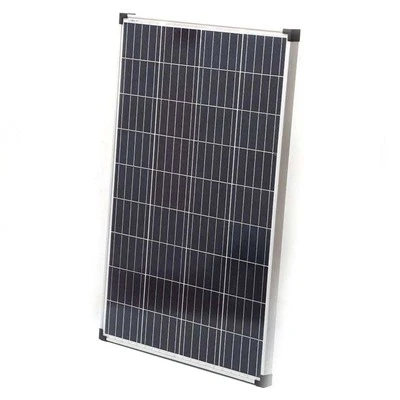
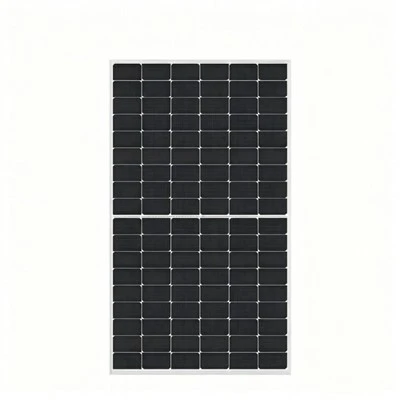
Now, let’s talk about different types of panels, because not all are made equal. First, monocrystalline vs polycrystalline. Monocrystalline is the fancy black ones, made from single silicon crystals – they’re more efficient, work better in low light, and are thinner/lighter, which is perfect for camping or hiking where every ounce counts. Polycrystalline are the blue ones, cheaper, but less efficient, so you need a bigger panel to get the same power. I sell way more monocrystalline to my outdoor customers, and poly to people just using solar at home for backup, because they’re not moving it much and saving a few bucks.
Then there are foldable vs rigid panels. Foldable panels are the mobile champs – they fold up like a laptop, come with carrying cases, have built-in kickstands or eyelets to hang them, and are way easier to toss in a backpack. The only downside? They’re a bit more fragile if you drop them, and the folding seams can wear out over time if you’re really rough with them. Rigid panels are great for permanent setups, like mounting on a van roof or a tiny home, but you can still get rigid portable ones for work sites – they’re heavy, but super durable and don’t have any moving parts.
Also, let’s not forget about ports and compatibility. This is another thing people mess up. Some panels only have a single USB-A port, which is fine for phones and tablets, but if you’ve got a laptop or a power bank, you need one with USB-C or a DC output. Wait, and make sure the panel’s output matches the device’s input for fast charging. A lot of cheap panels only do 5V/1A USB, which takes forever to charge a phone. I only carry panels with at least 18W USB-C PD (Power Delivery) because that will charge a phone in like an hour, and works with most laptops too.
Another big one: do you need a power bank (solar generator) or just a panel? Wait, hold on, I’m not gonna lie, I get asked this every single day. A portable solar panel is just what it sounds like – it turns sunlight into electricity, but it doesn’t store it. So if you want to charge your phone at night, you either need to charge a power bank during the day with the panel, or get a hybrid panel that has a small built-in battery. Solar generators are bigger, heavier, have their own battery, and usually come with AC outlets, so they’re great if you’re running a mini-fridge or a CPAP machine overnight. But they’re way more expensive than just a panel and a separate power bank. For our earlier 575Wh example, a 60W power bank plus a 120W panel would cost way less than a 600Wh solar generator, and you’re way more flexible – you can use the power bank at home for other things when you’re not camping.
Now, let’s talk about common mistakes I see customers making all the time. First, buying the biggest panel they can find because “more power is better”. No! A 400W panel is huge, heavy, and costs twice as much as a 120W one you actually need. If you’re only charging a phone and a laptop, that’s overkill, and you’re wasting money. Second, not angling the panel right. It sounds stupid, but if you just toss it on the ground flat, you’re losing 30-50% of its power. Tilt it so it’s facing the sun directly, use the kickstand, or prop it up on a rock. Third, buying cheap no-name panels on Amazon. I’ve seen panels that are listed as 100W but only put out 50W, and some even have faulty wiring that can damage your devices. I source all my panels from reputable brands, test every single one before selling, and offer a 2-year warranty, so you don’t have to worry about that. Fourth, forgetting about shade. Even a tiny bit of shade on a panel can cut its output in half. If you’re camping in a spot with trees, don’t set your panel under a pine tree – move it to a clear spot, even if it’s a 5-minute walk away.
Wait, let’s test this all with a real example so it sticks. Let’s say you’re a construction worker on a remote job site, and you need to power a drill (70W, 4 hours a day), a phone (15W, 8 hours), and a radio (20W, 10 hours). Add those up: (704) + (158) + (20*10) = 280 + 120 + 200 = 600Wh. Add 25% buffer: 750Wh. If your job site is in Texas, with 5 peak sun hours a day: 750 /5 = 150W panel. If you’re in Washington, 3 peak hours: 750 /3 = 250W panel. Add a 200Wh power bank so you can use the drill after the sun goes down, and you’re set. That’s way better than buying a random 300W panel that’s too big for your needs.
Now, let’s wrap this up with quick action steps, because I know you don’t wanna read a novel. Step 1: List every device you’ll power, their wattage, and how long you need to run each. Step 2: Add 25% to that total for losses. Step 3: Figure out your average peak sun hours per day (google it for your area, it’s super easy). Step 4: Divide your adjusted total Wh by peak sun hours to get your minimum panel wattage. Step 5: Pick a monocrystalline panel (for low light/small size) with at least 18W USB-C for fast charging, and match it with a power bank if you need storage.
If you’re still unsure, or you’ve got a weird setup (like you need to power a CPAP or a caravan AC), hit me up. I don’t do generic sales pitches – I ask you specific questions about where you’re using the panel, what gear you have, and how long you need to run it, and I help you pick exactly what you need, no upsells, no extra stuff you don’t want. We can work out bulk pricing for teams or businesses too, if that’s what you’re after.
At the end of the day, portable solar isn’t rocket science, but it’s way too easy to overcomplicate it and waste money. I’ve been there – I bought a 300W panel for my first camping trip and barely used half of it, and I wasted $200 I didn’t need to spend. Don’t be that guy. Do the quick math, account for where you’re using it, and pick a reputable panel that fits your needs.
Bifacial Solar Panels References:
- National Renewable Energy Laboratory. (2022). Photovoltaic Array Performance Model. U.S. Department of Energy.
- International Electrotechnical Commission. (2021). IEC 61853-1: Photovoltaic (PV) module performance testing and energy rating – Part 1: Irradiance and temperature performance measurements and power rating.
- Outdoor Industry Association. (2023). Portable Power Solutions for Recreational and Remote Work Applications.
- Consumer Reports. (2022). Buying Guide: Portable Solar Panels and Power Banks.
Dongguan MylAn International Trade Co., Ltd.
As one of the most professional portable solar panels manufacturers and suppliers in China, we’re featured by quality products and good price. Please rest assured to buy advanced portable solar panels in stock here from our factory. Welcome to contact us for pricelist.
Address: Room 401, Building 5, No.7, Machong Section, Shuixiang Avenue, Machong Town, Dongguan City, Guangdong Province
E-mail: salee@mylansolar.com
WebSite: https://www.mylansolar.com/
