Hey there, if you’ve ever worked on a plumbing project—whether it’s fixing a leak under the sink, running lines for a new garden irrigation system, or wiring a garage’s electrical conduit—you’ve probably encountered PVC pipe. But here’s the thing: PVC pipes don’t just connect on their own. You need those little (and sometimes not-so-little) PVC pipe fittings that make the whole system work. As a PVC pipes supplier, I get asked all the time, “Wait, what are the different types of these fittings anyway?” Most people think there’s just one or two, but trust me, there’s a whole catalog of them, each with a specific job to do. I’m gonna break ‘em down in plain, no-jargon terms, so next time you’re at the hardware store or ordering from a supplier, you won’t feel totally lost. PVC Pipes
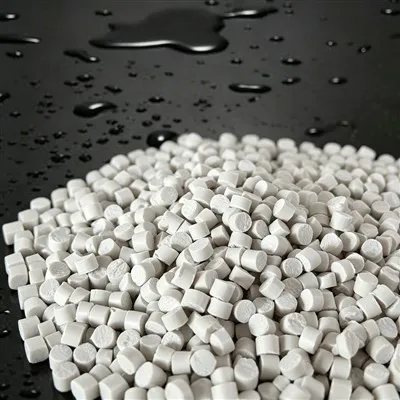
First off, let’s keep it quick on the basics: PVC stands for Polyvinyl Chloride, and these fittings are made to join, redirect, extend, or cap PVC pipes. They come in all sizes—from tiny 1/2-inch ones for kitchen sinks to big 12-inch+ ones for commercial sewage lines—and different types for different jobs. No one fitting works for everything, which is why knowing which one you need saves you from showing up to a job with the wrong part (speaking from experience here—wasted an entire afternoon once driving back for a replacement elbow).
Let’s start with the most common ones you’ll see everywhere: couplings. Couplings are basically the “glue” that holds two straight pipes together, right? Wait, but not just any couplings—there are two main types. Slip couplings are the basic ones where you just push two plain pipe ends into each side, glue ‘em up, and that’s it. They’re for when you need to connect two pieces of the same-size pipe that’s already cut to length. Then there’re reducing couplings, which are super handy if you’re linking two pipes of different sizes—like a 1/2-inch pipe to a 3/4-inch one. I swear, reducing couplings are a lifesaver because you don’t have to mess with adaptors or cut extra pipe down to size. One quick note: never use a coupling for a joint that’s under stress (like a horizontal pipe holding water weight)—stick to straight, stress-free runs for those.
Next up, elbows. Elbows are the bendy ones that change the direction of a pipe, and they’re measured by the angle they turn. 90-degree elbows are the workhorse—you use ‘em to turn a pipe corner, like going from a horizontal line under your floor up to a wall for a faucet. Then there are 45-degree elbows, which are for smaller turns, like when you don’t want a sharp corner (say, running a line along a baseboard without a kink). Wait, and don’t forget reducing elbows! Same idea as reducing couplings—they let you switch pipe sizes and turn a corner at the same time. I’ve had contractors tell me reducing elbows cut their project time in half because they don’t have to add an extra adaptor. Pro tip: always check the elbow’s “street” vs. “standard” type—street elbows have one threaded end (wait, no, hold on, PVC elbows—street PVC elbows have one slip end and one threaded end, while standard are both slip, for when you need to connect to a threaded fixture like a faucet.
Then there are tees. Tees get their name because they look like a T, right? They have three openings: one straight run, and a side outlet. Why would you use a tee? For branching a pipe off the main line. Like, if you have a main water line running to your house, and you want to add a line to your washing machine, you use a tee. Again, there are reducing tees here too—if the main line is 1 inch and the branch is 1/2 inch, a reducing tee lets you do that in one piece, no extra parts. And same as elbows, tees can be standard (all slip ends) or street (one threaded end) if you’re connecting to a threaded fitting. I see a lot of DIYers mess up here—they use a regular coupling to branch a line, which won’t hold because it’s not a T-shape that can support the side pressure. Don’t be that guy.
Now for crosses. Crosses are like tees but with four openings—they look like a plus sign (+). You only really need crosses in specific scenarios, like if you’re running a main line that needs two side branches opposite each other (like running lines to two faucets on a wall that’s perpendicular). They’re not as common as tees or elbows, but when you need ‘em, you really need ‘em. I stocked up on crosses a few years back for a commercial project where they had to run a irrigation line that fed four separate garden beds, and it saved the team so much time not having to piece together two tees.
Moving on to end fittings—these are the ones that cap off a pipe or connect it to something else. First, caps. Caps are exactly what they sound like: round, flat pieces that screw or glue onto the end of a pipe to seal it shut. Use ‘em if you have an unused pipe end you don’t want debris getting in (like a pipe in your basement that’s capped off for a future addition). Then there are plugs. Wait, plugs are similar but usually threaded—you twist them into a threaded pipe end, like if you have a threaded fitting sticking out of a wall temporarily. And then there’s the adaptor (sometimes called a bushing, but no—adaptors are different). Adaptors connect PVC pipe to a different type of pipe, like copper pipe or metal, because those use threaded ends. For example, if you’re connecting a PVC pipe to a metal faucet, you need a male or female threaded adaptor—one end glues to PVC, the other threads into the metal fixture. I’ve seen so many DIYers try to glue a metal pipe, which won’t work because PVC glue only sticks to PVC, so adaptors are non-negotiable here.
Wait, another type I can’t skip: reducing bushings. Hold on, these are different from adaptors—bushings are for reducing the size of an opening on a fitting, like if you have a 1-inch tee and you want the side outlet to be 1/2 inch, a bushing screws into the tee’s opening to shrink it down. They’re super useful when you don’t want to replace an entire tee to change sizes, which saves money and time. And don’t forget about union fittings! Unions are for when you need to take apart a pipe joint later—like if you have a long run of PVC pipe behind a wall and you might need to access it, a union lets you disconnect the two parts without cutting the whole pipe. A lot of people don’t use unions, but they’re a lifesaver for future repairs. I always recommend adding a union every 10 feet or so in inaccessible areas.
Also, let’s talk about specialty fittings because they’re not as common but super important. Like, cleanouts. Cleanouts are fittings with a threaded plug that lets you snake a drain line if it gets clogged—you’ll see these in basement floor drains or bathroom lines. They’re a must-have for residential plumbing because without ‘em, you’d have to cut the pipe to get to a clog. And then there’s spacer couplings for PVC conduit—wait, right, some PVC is used for electrical wiring too, not just plumbing. Spacer couplings keep wires from getting pinched when you pull ‘em through the conduit, which is a big deal for electricians. Oh, and I’d be remiss not to mention 90-degree street elbows for conduit—they’re similar to plumbing elbows but made to be UV-resistant for outdoor wiring runs.
Wait, let’s clear up a common confusion: slip vs. socket fittings. No, slip is just the term for when the pipe fits inside the fitting’s socket—when you glue ‘em, you apply primer first, then glue, push the pipe in, and twist a quarter turn to make sure it’s sealed. That’s the standard for most fittings except threaded ones, which use Teflon tape instead of glue. Also, all these fittings have rating marks on them—look for “Schedule 40” or “Schedule 80” stamped on the side. Schedule 40 is the standard for residential plumbing and irrigation, while Schedule 80 is thicker, for higher-pressure commercial lines. That’s a quick check when you’re ordering or picking parts up—don’t get Schedule 80 if you just need regular residential parts, it’s overpriced, but don’t grab Schedule 40 for a high-pressure line, it’ll crack.
As a PVC pipes supplier, I’ve seen firsthand how picking the wrong fitting can turn a quick job into a nightmare. Last month, a DIYer ordered a coupling instead of a reducing tee for his laundry room line, and he had to come back three times because the coupling couldn’t handle the side pressure—cost him extra time and money. That’s why I always make sure my customers have the right info, not just pipes but the fittings that go with ‘em. If you’re working on a project, whether it’s small or big, don’t guess—ask for help.
I know this got into more details than I thought, but the thing is, PVC pipe fittings aren’t just random plastic bits—each type is designed for a specific purpose, and knowing which one to use makes your project go so much smoother. From couplings that connect straight pipes to crosses for branching lines, to cleanouts that save you from clogged drains, there’s a fitting for literally every need in PVC systems.
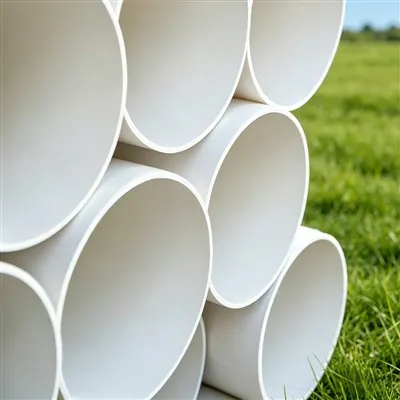
If you’re working on a plumbing, irrigation, or electrical conduit project and you’re not sure which fittings you need, feel free to reach out. As a PVC pipes supplier, I can help you pick the right sizes, types, and schedules so you don’t waste time or money on the wrong parts. No hoops to jump through, just straight answers for whatever project you’ve got going on.
PPR Fitting References:
- Plastic Pipe and Fittings Association. (2022). PVC Pipe & Fittings Handbook.
- National Plumbing Code of the United States. (2021). PVC Fitting Specifications.
- Schrock, L. (2020). PVC Plumbing Basics for DIYers. Home Repair & Improvement Press.
Hebei Ruijie Pipe Industry Co., Ltd.
Address: Industrial Park, Shaozhuang Township, Suning County, Cangzhou City, Hebei Province
E-mail: 1987870474@qq.com
WebSite: https://www.rjpprpipe.com/
