Hey everyone, thanks for stopping by my blog. I’m Jake, part of the team at an automotive rubber products supplier that’s been fielding so many questions lately: How do these little rubber expansion joints actually work? Most folks see ’em tucked under the hood, around exhaust pipes, or on cooling system hoses and just assume they’re just generic rubber bits—but trust me, there’s way more going on behind those curves. Let me break this down like I would for a tech at the shop down the street, no stuffy jargon, I promise. Automotive Rubber Products
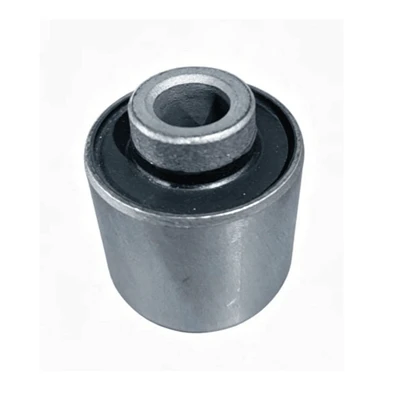
First off, let’s set the scene. If you’ve ever turned a car on, you’ve probably felt it vibrate—right? That engine’s firing, pistons are moving thousands of times a minute, the exhaust pulses with hot gases, the cooling system fluid expands when it heats up, contracts when it cools back down. All that movement and pressure would make rigid metal pipes or hoses crack, snap, or rattle like crazy if they were connected directly. That’s where rubber expansion joints come in; they’re the unsung heroes of keeping the whole system from falling apart (literally, sometimes—we’ve seen what happens when someone skips installing these properly).
So how do they work exactly? Let’s start with the core design. Our automotive expansion joints aren’t just a plain rubber tube—they’re molded with those bellows, those crinkly, accordion-like sections that you’ve probably noticed if you’ve ever crawled under a car. That shape is key. Those folds give the rubber flexibility so it can stretch and compress, but they also add strength to handle pressure. The rubber we use? Not just any old tire rubber, either. We mix in special compounds—natural rubber, EPDM, sometimes neoprene depending on the part of the car it’s for—because those materials resist heat, chemicals like gasoline or coolant, and weather way better than regular rubber. If we used cheap stuff, a joint might crack after a year, which isn’t just bad for your customer—it’s a headache for us as a supplier.
Now, the functions. Let’s walk through the main jobs they do, step by step. First up: vibration isolation. Every time your engine fires, it sends vibrations through the frame and the pipes attached to it. Those vibrations would travel straight to the exhaust manifold, then to the tailpipe, and make the whole system rattle loose. The rubber expansion joint absorbs that vibration because it’s soft enough to flex, but sturdy enough to hold its shape. We test this all the time in our lab—we shake expansion joints at frequencies that match engine RPM, and they don’t split or deform, which means your car’s not going to sound like a tin can driving down the highway.
Next, thermal expansion and contraction. Remember that fluid in the cooling system? When the engine’s idling, that fluid hits like 195 degrees Fahrenheit, and when you turn the car off, it drops to like 70 degrees. Metals expand when heated, shrink when cooled—if you have a straight aluminum pipe connected directly to the radiator, that constant change in length would put stress on the welds or the hose clamps. The expansion joint’s bellows let the pipe “move” a little without putting that stress on the rigid parts. Same thing with exhaust systems—exhaust gases can get up to 1,500 degrees, so the metal pipes expand a lot, and the rubber joint takes up that extra length without cracking. I’ve seen installs where someone tried to use a regular hose instead of an expansion joint, and within a month, the pipe pulled away from the manifold because it couldn’t expand. Oops.
Another big one: misalignment. When cars are assembled, sometimes the pipes don’t line up perfectly—minuscule shifts from when the frame is put together, or wear over time as the car ages. Those little off-kilter angles would cause friction between metal pipes, leading to wear and even leaks. The expansion joint’s flexibility lets it pivot and adjust so the pipes stay aligned, no rubbing, no leaks. That’s why we make different sizes and angles—some straight, some with a slight bend, to fit whatever misalignment a car might have.
Wait, but there’s more to it than just the rubber part. Most expansion joints have metal end fittings—either crimped rings or flanges—that connect them to the rest of the system. We make sure those fittings are compatible with whatever pipe or hose they’re connecting to, because if the joint pulls away from the metal, it’s useless. The rubber is vulcanized to the metal fittings, right? Vulcanization is that process where we heat the rubber and the metal together with chemicals so they bond, not just glued on. That bond has to be strong enough to handle pressure, so we test every batch of joints for pull strength. No one wants a joint that comes loose mid-road trip.
I get it, a lot of people think “it’s just rubber, how hard can it be?” But as a supplier, we spend so much time testing these things. We do thermal cycle tests—heat a joint up to 200 degrees, cool it down to -40, repeat that thousands of times, to make sure it doesn’t crack. We pressure test them too—pump water or air into them way more than they’ll ever see in a car, to make sure they don’t blow out. We even test for ozone resistance, because those joints are under the hood where ozone from the engine can break rubber down over time. Skipping any of that would save us a buck upfront, but it would lead to a lot of comebacks, and no one wants that.
Let me give a real example. Last year, we worked with a local trucking company that was having issues with their delivery vans’ exhaust systems. The pipes were cracking every 6 months because the drivers were idling the trucks for hours in cold weather, so the pipes were expanding and contracting nonstop. We switched them to our heavy-duty EPDM expansion joints, and they haven’t had a crack in over a year. That’s the kind of win we live for—fixing a real problem for real people, not just selling a part.
Another thing I should mention: these joints aren’t one-size-fits-all. A cooling system expansion joint is way different from an exhaust system one. Cooling system joints have to handle coolant, which is corrosive, and lower temperatures, while exhaust joints have to handle way more heat, and sometimes exhaust gases with sulfur or other chemicals. That’s why our team works with each customer to figure out exactly what they need—size, compound, fittings—because using the wrong joint is just asking for trouble.
I know when you’re looking for parts for your business or your shop, you just want something that works, right? No surprises, no failures, something that fits right the first time. That’s why we don’t cut corners on the rubber or the manufacturing. We source our rubber compounds from reputable suppliers, test every production run, and stand behind every joint we make.

At the end of the day, automotive rubber expansion joints are all about absorbing movement—vibration, heat, misalignment—so the rest of the car can keep running smoothly. They’re small, they’re easy to overlook, but they’re critical. If you’re a mechanic, a fleet manager, or someone looking for reliable automotive rubber products, I get that you want parts you can count on. We’re here to help you figure out exactly what you need, no confusing jargon, no hidden fees. If you’re looking to place an order, ask about custom parts, or just have more questions about how these joints work, get in touch with our team. We’re happy to walk you through anything.
Automotive Rubber Products References:
- Society of Automotive Engineers (SAE) International. (2021). Rubber Components for Passenger Vehicles: Material Selection and Performance Standards.
- Automotive Rubber Manufacturers Association (ARMA). (2022). Expansion Joint Design and Testing for Light and Heavy-Duty Vehicle Systems.
- International Organization for Standardization (ISO). (1431-1:2020). Rubber, vulcanized or thermoplastic—Resistance to ozone cracking—Part 1: General test methods.
- Spence, J. (2019). Automotive Exhaust System Dynamics: Vibration Isolation and Thermal Management. SAE International Journal of Passenger Cars – Mechanical Systems.
Anhui Denaifu Auto Shock Tech Co., Ltd.
As one of the most professional automotive rubber products manufacturers and suppliers in China, our products have good reputation in the market. Please rest assured to buy bulk high quality automotive rubber products for sale here from our factory. Good service and punctual delivery are available.
Address: No.88 Qingshan Road, Helixi Development Zone, Ningguo City, Anhui Province
E-mail: ngzx_wxm@126.com
WebSite: https://www.denaifuauto.com/
