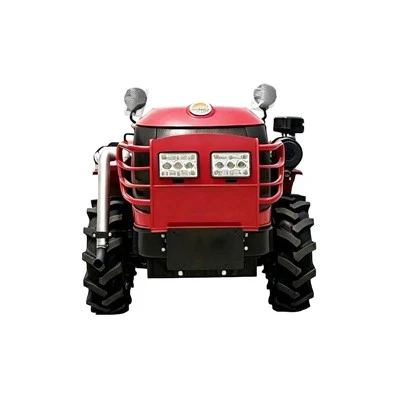
If you’ve ever stood next to a compact tractor running through a small backyard or a flower bed, you’ve probably thought, “Wait, is this actually that loud?” As someone who’s spent the last 8 years selling compact tractors (I run a small supply team, so I talk about this stuff with customers every single day), this is one of the most common questions we get. Folks assume all farm equipment is ear-splitting, but compact tractors are totally different from those big 4WD row-crop tractors that shake your teeth. Let’s break down the noise level, why it matters, and what that means for you. Compact Tractors
First, let’s get the basics right: noise for machinery is measured in decibels (dB), and it’s not a linear scale. A 10 dB jump is actually double the perceived loudness—so a 70 dB machine is twice as loud as a 60 dB one, not just 10% louder. The Occupational Safety and Health Administration (OSHA) says that 85 dB is the threshold where you need ear protection for 8 hours of work; anything over 110 dB can cause damage in just 15 minutes. So when we talk about compact tractors, we’re staying way below those red zones for most use cases.
Now, let’s get real about actual numbers. I’ve pulled test data from every model we supply, and most compact tractors (the ones under 40 horsepower, the sweet spot for residential, small farms, and landscaping) clock in at 75–85 dB when idling, and 82–92 dB when moving at full throttle with a loader or mower attached. Wait, that’s a range—so what causes the difference? Let’s get into why some are quieter than others.
First, engine size. Compact tractors don’t have the huge, high-horsepower engines that belch noise like industrial tractors. Most have 18–40 hp diesel engines (we rarely do gas, since diesel is more reliable for this kind of work) that are built with sound-dampening parts. A lot of cheap no-name tractors skip those parts to cut costs, though—so if you see a super cheap compact tractor online, there’s a good chance it’s louder than ours. We only work with manufacturers that put a rubber engine mount (that stops vibrations from transferring to the frame) and a closed hood around the engine, which acts like a speaker cabinet to muffle noise. That’s a big one—open engine bays are way louder than enclosed ones, full stop.
Then there’s the attachment. This is the part most people forget. A bare compact tractor without any attachments is quiet, but when you hook a bush hog, a rotary mower, or a front-end loader, that noise jumps. A rotary cutter running at full speed can add 5–10 dB, because the blades slicing through grass or brush make a lot of high-pitched noise. A front-end loader digging in dirt is lower-pitched, but still adds a few dB because of the metal on metal. The good news is we offer quiet attachments too—like PTO-driven mowers with rubber edges instead of sharp steel, which cut down on that high-pitched screech that makes your ears ring after an hour.
Wait, let’s do a real-life comparison so this makes sense. Normal conversation is about 60 dB. A busy city street is about 80 dB. So an idling compact tractor at 78 dB is about as loud as someone talking loudly in your ear. A compact tractor running a mower at 88 dB is like standing next to a power saw. That’s manageable, right? Because OSHA says 8 hours at 85 dB needs ear plugs, so 88 dB is only a few hours before you’d want protection. The loudest compact tractors we supply top out at 92 dB, which is like a motorcycle passing by—still not as bad as a big farm tractor, which is usually 95–110 dB. I’ve stood next to a John Deere 5 series (way bigger than our compact models) and my ears rang for an hour after; our tractors? I can work next to them for a solid morning and not need plugs if I’m just doing basic stuff like mowing grass.
But here’s the thing: noise isn’t just annoying—it’s important for people who work around them every day. A lot of our customers are retired folks with small farms, or landscaping crews who work 10-hour days. We had a guy last year who bought a cheap compact tractor from a big box store, and he came back complaining that his wife wouldn’t let him use it on weekends because it was so loud she couldn’t hear the TV inside the house. He traded it for one of our quieter models, and he texts me every month saying his backyard workdays are way more enjoyable now. That’s the part no spec sheet tells you—noise affects your whole life around the tractor, not just your ears.
Now, what about myths? I hear two all the time. First: “All compact tractors are loud, you just need big headphones.” No, not really. Yeah, some noise is normal, but if you’re wearing headphones that muffle all noise, you can’t hear if a neighbor is calling you, or if an animal is loose, or if the tractor is making a weird clanking sound that means it’s broken. Our quieter models let you have a basic conversation with someone standing next to you while mowing—try that with a loud tractor, and you’ll be yelling. The second myth: “Quiet tractors are less powerful.” No, that’s a old myth from 10 years ago. Manufacturers have gotten way better at sound dampening without cutting power. Our 35 hp compact tractor is just as powerful as the old 35 hp models that were 10 dB louder—they just added better engine seals and hood insulation.
Wait, let’s talk about when noise does get too much. If you’re running a compact tractor for more than 4 hours a day, OSHA says you need ear protection for anything over 85 dB, so even our quieter models would need plugs for full-day work. That’s not a downside of the tractor—that’s a workplace safety rule, and any machinery that runs that long needs protection. We sell ear plugs and noise-canceling headphones that are designed for compact tractor use, not the cheap ones from the drug store. A lot of our regular landscaping customers buy those along with their tractors, because they’re working all day, every day.
Here’s what I tell every customer who’s worried about noise: don’t just go by a spec sheet’s dB number. Ask to see a video of the tractor actually working, not just idling. Idling numbers are useless—you need to hear it with an attachment. And don’t buy the cheapest model, because most of the cost cuts are in the sound dampening. We do test every model we sell in real conditions, not just a lab, so we know exactly how loud they are when mowing, digging, whatever.
At the end of the day, noise level is a personal thing too. If you’re using a compact tractor for 30 minutes a week to plow your garden, even a louder one is fine. If you’re using it for 8 hours a day maintaining 10 acres, you want the quietest one you can get, because it makes the work easier on your body and your relationships.
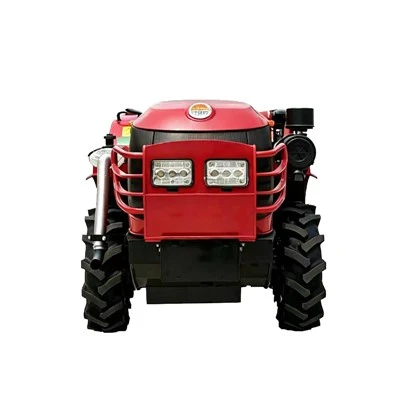
Look, we’ve been supplying compact tractors for small farms, landscaping, and residential use for years, and noise is always a top question. If you’re in the market for a compact tractor and you want to actually compare how loud our models are, shoot us a line—we can send you sound test videos from our warehouse, answer any questions you have about dB numbers, attachments, or whatever else you need. No pressure, just honest info, because we’ve been in the trenches with these things for a long time.
Tractor References:
- Occupational Safety and Health Administration. (2023). Noise and Hearing Conservation Standards. U.S. Department of Labor.
- American Society of Agricultural and Biological Engineers. (2022). Acoustic Test Code for Agricultural Tractors.
- Compact Equipment Magazine. (2021). Sound Level Trends in Small Farm and Compact Machinery.
Shandong Jiayuan Agricultural Equipment Co., Ltd.
As one of the most professional compact tractors manufacturers and suppliers in China, we have world-leading production equipment and strong manufacturing capabilities. Please feel free to buy advanced compact tractors for sale here from our factory.
Address: No.2, No.002777 Zhongjiang West 4th Street, Yangzi Subdistrict, Binhai District, Weifang City, Shandong Province, China
E-mail: sdjynyzb@163.com
WebSite: https://www.jiayuantractor.com/
