Hey there! If you’re running a sheet metal fabrication shop, you know that one second of instability on your laser cutting machine can turn a $50 sheet of 16-gauge steel into scrap metal, set your production line back hours, and leave your team pulling their hair out. As someone who’s spent the last 8 years selling, troubleshooting, and tweaking sheet metal laser cutting machines—so not some textbook nerd who’s never gotten grease under their nails—I’ve seen way too many guys skip the small steps that keep their cutters running like a well-oiled (pun very intended) machine. Let’s cut to the chase (another pun, sue me) and talk about how you actually keep that machine stable when the going gets tight, no fluff, no jargon you have to Google at 2 a.m. when a job’s due tomorrow. Sheet Metal Laser Cutting Machine
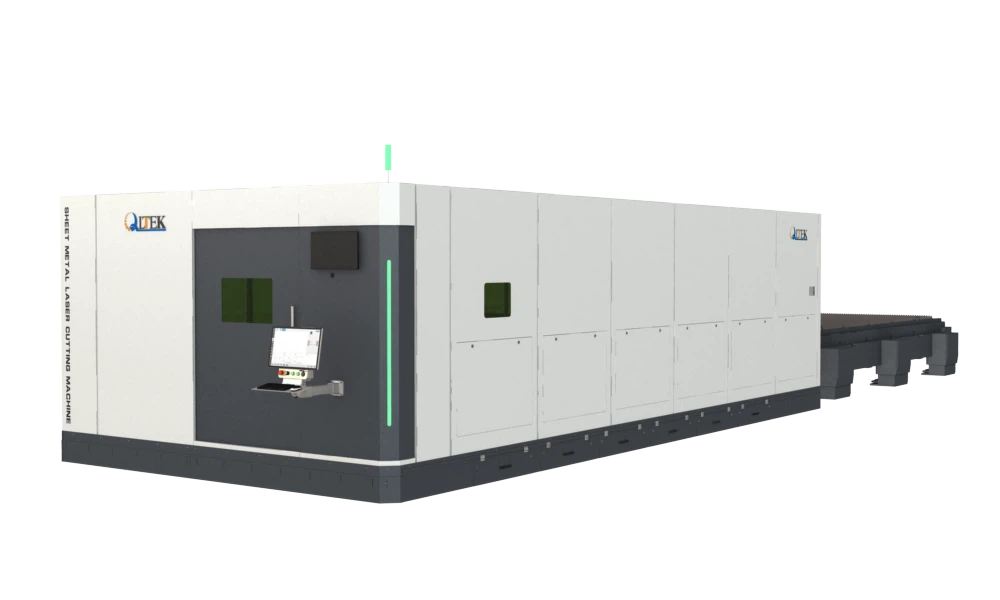
First off, let’s get one thing straight: stability doesn’t happen by accident. I see a lot of new operators (and even some old heads who think they know it all) treating their laser cutter like a set-it-and-forget-it coffee maker. Spoiler alert: that thing weighs literally tons, and if you don’t respect it, it’ll bite back. Let’s start with the foundation, because you can have the fanciest fiber laser on the market, but if it’s sitting on a wobbly floor? You’re screwed before you even hit the “start” button.
I’ve had customers call me at 7 a.m. panicking because their machine was vibrating so bad mid-cut, the laser was skipping lines on a custom bracket for a food processing plant. When I showed up, the first thing I noticed was their machine was set up on a mezzanine floor that had creaky, uneven joists—they thought it was “sturdy enough” for a forklift, but a 1,200-watt laser is a precision tool, not a pallet jack. The fix? Adding a set of heavy-duty vibration isolation pads (we sell these as part of our on-site setup package, fyi) and shimming the base so every foot was perfectly level within 0.02mm. That small adjustment cut their vibration by 90%—no more scrap brackets, no more lost time. Pro tip here: don’t trust the floor’s “level” if it’s in a shop that gets forklifts rolling in and out all day. Do a quick check with a digital level once a month, not just when you first install the machine.
Next up, the consumables. I get it, consumables are an extra cost, and it’s tempting to stretch the life of a nozzle or a lens just one more job to save a buck. But here’s the hard truth: a dirty, dented nozzle or a scratched lens is the #1 cause of inconsistent cuts that feel like the machine is unstable, even if the machine itself is fine. Let’s talk nozzles first. When a nozzle gets a build-up of metal slag or even a tiny dent from mishandling during setup, the laser beam can’t focus correctly—so it’s like shining a flashlight through a crumpled piece of foil. I’ve seen operators use a nozzle that’s been in for 15 jobs because “it still works,” but by job 12, their cut kerf (that little gap the laser makes) is widening by 0.5mm, making parts that don’t fit together for welding. For lenses? A tiny speck of dust from blowing compressed air when you’re changing materials is all it takes. I recommend cleaning the lens with our lens cleaning kit every 20 hours of operation, and replacing consumables (nozzles, caps, lens) every 50 hours—even if they look “fine.” Trust me, a $20 nozzle saves you from a $500 scrap job.
Then there’s the thing almost no one talks about: the linear rails and drive systems. These are the “bones” of your laser cutter—they’re what the head moves along, and if they’re dirty or not lubricated properly, the head will jerk, skip, or drift mid-cut, which feels like instability. I’ve had a customer come to me saying their machine was “shaking” along the X-axis, and when I opened the cover, the rail was caked with old cutting oil and metal dust—they’d been using generic grease to lubricate it instead of the high-performance rail lube we recommend. Here’s the rule: clean the linear rails with a lint-free cloth every 80 hours (right after a long run is best, when the heat from the machine burns off loose dust) and re-lubricate with the specific lube made for your machine’s rails. Don’t use WD-40, don’t use heavy gear oil—those will attract more gunk and wreck the rails faster. Also, check the drive belts (for machines that use belts instead of rack and pinion) every 100 hours. A loose belt will make the head lag, which throws off the cut path. Tighten it to the manufacturer’s spec, not just “snug”—too tight and you’ll wear out the bearings, too loose and you get drift.
Wait, what about cutting parameters? A lot of guys think stability is just the machine’s physical parts, but no—your laser settings matter too. If you’re pushing the machine too hard—running a 2000W laser on 1/4-inch steel at a feed rate it can’t handle—you’re going to get wobble, uneven cuts, and even machine vibration that damages parts over time. I see this all the time: operators want to cut as fast as possible to meet a deadline, so they crank the feed rate up 20% beyond the recommended spec, and by the end of the shift, their machine is making weird noises and the parts are garbage. The fix? Reference the material-specific parameter chart that comes with your machine (we update ours every quarter based on new fiber laser tech) and don’t deviate unless you’re testing with scrap first. For example, cutting 1/8-inch aluminum? We recommend 1500W, 400 IPM feed rate, 15 PSI assist gas. If you crank that to 500 IPM, you’ll get a rough, wobbly edge on the bottom of the part, and that’s not just a quality issue—it’s a sign the machine’s motion control is working too hard, which leads to long-term instability. Also, make sure your assist gas pressure is right: too little, and slag builds up on the nozzle; too much, and it causes turbulence that messes with the laser beam. For most thin materials (16-gauge or less), 20-25 PSI works; for thick material (1/2-inch and up), 30-35 PSI. Do a quick test cut on scrap before you jump into a production run—takes 5 minutes, saves you hours of scrap.
Another big one: operator training. I know, I’m a salesperson, so it makes sense that I’d say that, but hear me out. I’ve had customers buy our top-of-the-line 4000W laser, then hire an operator who only worked on a 10-year-old machine with a basic controller, and wonder why their new machine is “unstable.” New laser cutters have automatic alignment, height control, and motion control features that older machines didn’t—if you don’t know how to use them, you’ll turn a precise tool into something that cuts like a beginner. For example, our machines have a pierce delay feature that adjusts how long the laser pauses on the material before piercing through—if an operator turns that off because “it takes too long,” you get a big bang at the start of the cut that jars the machine and throws off stability. We include on-site training for all our machines, and we offer quarterly refreshers for operators who want to learn new features, because even a small thing like knowing how to calibrate the height sensor correctly can make a huge difference. I’ve seen a shop that cut their scrap rate by 12% just by sending their two operators to a 1-day refresh course—no new parts, no new machines, just knowing how to use what they had.
Wait, what about when you’re not using the machine? A lot of guys shut off their laser and leave it covered in dust, but if you leave the head parked on the same spot for days, you can get permanent sag in the linear rails or even warping in the gantry, especially if your shop is hot and humid. I tell all our customers to move the laser head to the center of the work bed when shutting down for more than 8 hours, and to run a 5-minute “clean cycle” at the end of each shift—blows out dust from the lens and rails, clears the nozzle, and keeps the moving parts from seizing up. Also, if you’re in a humid area (like coastal Florida or Pacific Northwest), add a dehumidifier near the machine. Moisture in the air can cause corrosion on the linear rails and drive components, which leads to rough movement and instability over time. I had a customer in Seattle who skipped the dehumidifier for 6 months, and their rail started rusting—cost them $1,800 to replace, plus 2 weeks of downtime. A $100 dehumidifier would’ve prevented that.
Let’s talk about common mistakes I see all the time that people don’t realize cause instability: first, using generic spare parts. I get it, Amazon has cheap nozzles for $5 each, but those are made from cheap brass that warps after 10 cuts, which throws off the beam alignment. Our nozzles are precision-machined to within 0.01mm, so they fit perfectly every time. Second, ignoring the machine’s error codes. If your controller gives you a “vibration sensor high” code, don’t just hit “acknowledge” and keep cutting—investigate. That code is there for a reason, and ignoring it can lead to bigger issues, like a failing servo motor or a misaligned gantry. Third, overloading the work bed. If you’re stacking 10 sheets of steel on the bed when it’s only rated for 5, that extra weight will strain the gantry drive and cause it to drift mid-cut. Stick to the machine’s weight limit—we list that clearly in the specs, and it’s not a suggestion, it’s a rule.
Now, let’s get practical—what do you do if you’re already having stability issues? I always recommend walking through this quick checklist first, before calling a service tech, because 9 times out of 10, it’s one of these simple fixes: 1) Check the machine’s level with a digital level—if it’s off by more than 0.02mm, shim it. 2) Inspect the nozzle and lens for damage or dirt. 3) Clean and lubricate the linear rails. 4) Verify your cutting parameters against the material spec. 5) Make sure the assist gas pressure is correct. If none of that works, then it’s time to call for service, but most issues are fixable in 10 minutes without a tech.
Here’s the thing I want you to take away: stability isn’t about having the newest, biggest, most expensive laser cutter. It’s about consistency—doing the small, regular things that keep the machine in good shape, and making sure your team knows how to use it right. I’ve seen shops with 10-year-old laser cutters that run as stable as new ones, because they stick to the basics: level the floor, replace consumables on time, clean the rails, use the right parameters, and train their operators.
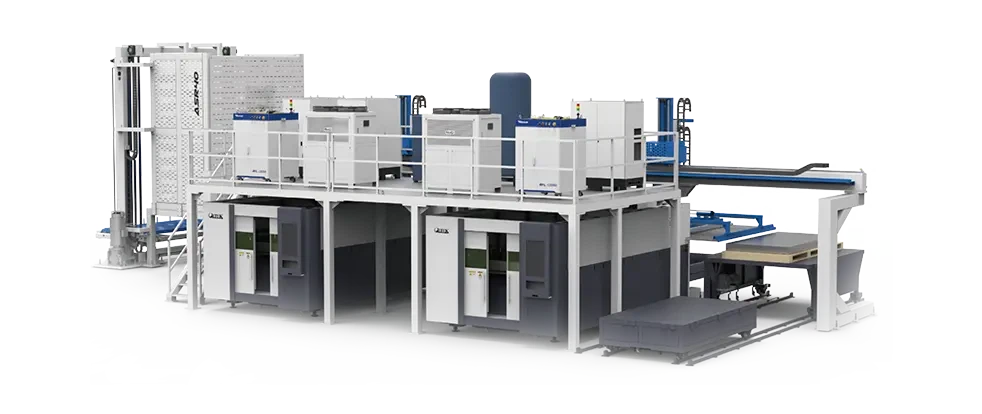
If you’re tired of scrap parts, downtime, and that constant stress of crossing your fingers when you hit “start” on a big job, we can help. We don’t just sell sheet metal laser cutting machines—we provide full on-site setup, training, and ongoing support to make sure your machine runs stable every single shift. Whether you’re a small shop just starting out or a big fabrication plant looking to upgrade, we’ll work with you to tailor a plan that fits your needs. Don’t let instability kill your production or eat into your profits—reach out to talk about your requirements and how we can help you get your laser cutter running like a well-oiled machine.
Laser Welding Machine References:
- Laser Fabrication Association. (2022). Best Practices for Fiber Laser Cutting Machine Stability and Maintenance. LFA Technical Report Series.
- Smith, J. (2021). Linear Motion System Maintenance for Precision Sheet Metal Cutting Equipment. Journal of Industrial Laser Applications, 33(4), 189-197.
- Industrial Laser Solutions. (2023). Operator Training: The Overlooked Factor in Laser Cutting Consistency. ILS Monthly Review.
- American Welding Society. (2020). Material Parameter Optimization for Fiber Laser Cutting of Sheet Metal. AWS Technical Bulletin No. 247.
Suzhou Quick Laser Technology Co., Ltd.
Suzhou Quick Laser Technology Co., Ltd. is one of the most professional sheet metal laser cutting machine manufacturers and suppliers in China, featured by quality products and good price. Please feel free to buy durable sheet metal laser cutting machine for sale here from our factory. For more information, contact us now.
Address: No. 6, Qingqiu Street, Industrial Park, Suzhou, Jiangsu Province, China
E-mail: info@qlteklaser.com
WebSite: https://www.qlteklaser.com/
