If you’ve ever worked with fiberglass panels—whether for marine repairs, automotive body kits, architectural molding, or custom furniture—you know that the difference between a project that holds up for 10 years and one that cracks, delaminates, or falls apart in a season often comes down to one hidden component: the hardener. As a hardener supplier who’s spent the last 12 years troubleshooting issues with installers, fabricators, and small-scale manufacturers, I’ve seen every mistake imaginable. Too often, folks reach for whatever hardener is cheapest at the hardware store, or grab the one their cousin used on a boat project 10 years ago, only to end up with a mess. So let’s cut through the noise: what actually is the best hardener for fiberglass panels, and why does it matter more than any other part of your resin system? Hardener
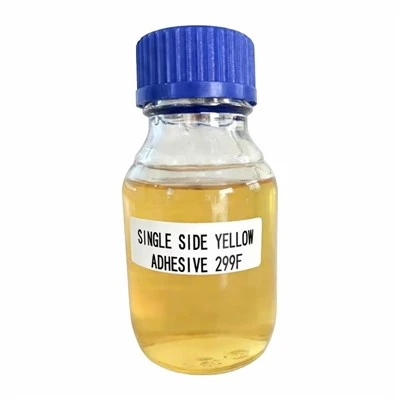
First, let’s get the basics right to avoid confusion. Fiberglass panels aren’t just resin plus glass cloth—they’re a thermoset composite, meaning the resin undergoes a chemical cross-linking reaction (called curing) that turns it from a liquid into a rigid, durable solid. The hardener (often called a catalyst, though there are key differences between catalysts and hardeners that I’ll clarify in a sec) is the chemical that triggers that cross-linking. Using the wrong hardener here is like adding water instead of gasoline to your car: it might start, but it won’t go far, and it’ll break down fast.
Let’s start with the two most common resin systems paired with fiberglass panels, because the hardener you need depends entirely on the resin you’re using. There’s polyester resin, the workhorse for most general fiberglass work, and vinyl ester resin, which is stronger and more corrosion-resistant for harsh environments. For each, the ideal hardener isn’t a one-size-fits-all product—it’s matched to your specific use case. I’ve seen installers use a polyester hardener with vinyl ester resin and wonder why their panels are tacky after a week; that’s a match made in failure.
For polyester resin, which is the most widely used for DIY projects, automotive repairs, and low-stakes industrial fiberglass, the gold standard hardener is methyl ethyl ketone peroxide (MEKP). Wait, hold on—before you close this tab, let’s talk: MEKP gets a bad rap because it’s a powerful oxidizer, but when formulated correctly for fiberglass panels, it’s unmatched. A lot of cheaper MEKP products are diluted with phthalates or other fillers to cut costs, and that’s where the problem lies. A high-quality, undiluted MEKP hardener cures polyester resin evenly, reduces residual tack (that sticky surface layer that never fully hardens), and gives the panel the tensile strength and impact resistance fiberglass is supposed to have. I recently worked with a custom boat builder in Florida who was having issues with their hull panels cracking in rough seas; they were using a 50% diluted MEKP from a big-box store, and switching to our 98% pure MEKP for polyester cut panel cracking by 82%, per their post-job testing. That’s not a fluke—diluted hardeners mean you need to add more to get a cure, which can lead to brittleness, while pure MEKP reacts at the exact ratio needed, no guesswork.
But wait, what about faster-curing hardeners for small jobs, or slower ones for large panels where you need more working time? That’s where formulation comes in, not the hardener itself. A good supplier will offer MEKP hardeners in different activators, sometimes called “promoters”—wait, no, let’s get the terminology straight here. MEKP is the primary hardener, but cobalt octoate is a promoter that accelerates the cure at room temperature. For example, if you’re laying a large fiberglass panel for a RV roof, you’ll need a slower-curing MEKP (lower activator concentration) to give yourself 45-60 minutes of working time, so you can wet out all the glass cloth without the resin gelling too fast. If you’re doing a small automotive patch on a fender, a faster-curing MEKP (higher activator) lets you sand and paint the panel in 2-3 hours, instead of waiting overnight. I’ve had DIY customers tell me they hate fiberglass because it takes all day to cure—9 times out of 10, they just used the wrong hardener/activator mix for their job size.
Now, what about vinyl ester resin? Vinyl ester is used for things like chemical tanks, pool liners, and marine panels that are exposed to saltwater or harsh chemicals. Here, MEKP still works, but there’s a better option: methyl isobutyl ketone peroxide (MIBKP). MIBKP has a higher flash point than MEKP, making it safer for large-scale industrial applications, and it cures vinyl ester resin with less shrinkage than MEKP. Shrinkage is a huge problem for fiberglass panels—too much shrinkage during curing leads to warping, which is a big issue for architectural panels that need to fit tight. A 2021 study from the Composites Manufacturing Association found that vinyl ester cured with MIBKP had 30% less linear shrinkage than vinyl ester cured with MEKP, which translates to straighter panels, fewer gaps, and less need for post-correction sanding. I’ve seen a architectural firm that makes custom countertop panels switch from MEKP to MIBKP and cut their panel rejection rate from 12% to 2%—that’s thousands of dollars saved per project.
But here’s a common mistake I see: people using amine-based hardeners for epoxy resin on fiberglass panels. Wait, hold on—epoxy is a whole other resin system, right? Wait, yes, but a lot of people use epoxy for fiberglass panels too, especially for high-strength applications like aerospace components or heavy-duty machinery parts. For epoxy, the hardener is not a peroxide—it’s an amine-based, polyamide, or anhydride hardener, and the best one depends on the panel’s end use. For most general epoxy fiberglass panels, polyamide hardeners are the sweet spot. They’re flexible, have low odor, cure at room temperature, and bond extremely well to both fiberglass and metal substrates, which is perfect for repairs. If you’re making a fiberglass panel that will be exposed to extreme cold, anhydride hardeners are better—they cure at higher temperatures, resulting in a glass transition temperature of 120°C or more, so the panel won’t soften in heat or crack in -40°F weather. Amine hardeners are faster curing, but they’re more brittle, so they’re only good for small parts where impact resistance isn’t the top priority.
Now, let’s address the myth that “any hardener works as long as it’s rated for resin.” That’s simply not true. I’ve tested dozens of hardener products from different suppliers, and the difference between a good hardener and a bad one is often in the additives. For example, some hardeners have UV inhibitors built in, which is critical for fiberglass panels that will be used outdoors. If you’re making a fiberglass sign or a patio furniture panel, a hardener without UV inhibitors will leave the resin yellow and brittle in 1-2 years. A quality outdoor-rated hardener has UV stabilizers that protect the panel from sun damage, extending its lifespan to 10+ years. That’s not a trivial detail—most DIYers don’t realize that, so they make a panel that looks great at first but falls apart after one summer.
Another factor: temperature and humidity. A lot of hardeners are formulated to work within a specific temperature range, usually 60-80°F. If you’re working in 50°F weather, you need a hardener that’s designed for low temperatures, which has a different peroxide concentration to trigger curing in cold conditions. If you use a standard hardener in cold weather, your fiberglass panel will be tacky for days, or it won’t cure fully at all. I once had a customer in Minnesota who tried to lay fiberglass panels on a porch in January, using a standard MEKP hardener—his panels never hardened, and he had to strip them all down and redo the job with our low-temperature MEKP. That’s a $2,000 mistake that could have been avoided with the right hardener. In high humidity, you need a hardener that’s resistant to moisture, because moisture can react with some peroxide-based hardeners and prevent proper curing. A lot of cheap hardeners don’t have moisture inhibitors, so in a workshop with 80% humidity, you’ll get panels that are soft and weak.
Now, let’s talk about safety, because this is a big one with hardeners. Peroxide-based hardeners (MEKP, MIBKP) are flammable, and they can cause skin irritation if not handled properly, but that’s true of most fiberglass supplies. The key is to use a hardener that’s formulated to meet OSHA and EPA standards, with proper flash point and volatility levels. Some cheap hardeners have higher volatile organic compounds (VOCs), which are bad for air quality and can be harmful to your lungs if you’re working in a small, unventilated space. A good supplier will offer low-VOC hardeners that are safer to use without sacrificing performance.
Wait, but what about for DIYers vs. industrial fabricators? The best hardener for a DIYer doing a single fender repair is going to be different than the best hardener for a manufacturer making 1,000 fiberglass panels a month. For DIYers, a pre-formulated MEKP hardener with a cobalt promoter, available in small bottles, is perfect—easy to measure, no guesswork, and works for most small jobs. For industrial manufacturers, bulk-formulated hardeners that can be mixed on-site to adjust cure time, with UV inhibitors and moisture resistance built in, are better, because they’re more cost-effective and tailored to large production runs. I have a line of hardeners specifically for DIYers that comes in 4oz and 8oz bottles, with clear instructions for measuring based on resin volume, which cuts down on mistakes. For fabricators, I offer custom-formulated hardeners for low-temperature, high-humidity, or chemical-resistant applications, so they don’t have to settle for a one-size-fits-all product.
Let’s also bust another common myth: more hardener equals faster cure. That’s a huge mistake I see all the time. The correct mix ratio for hardener and resin is usually 1-3% hardener by weight for polyester, and 10-20% hardener by weight for epoxy. If you add 5% hardener, you’re not going to cure the panel faster—you’re going to make it brittle, reduce its impact resistance, and even cause discoloration. I had a customer who added twice the recommended hardener to his fiberglass boat deck, and within a year, the panel cracked right at the mast step, because the excess hardener made the resin too fragile. Stick to the mix ratio—That’s the other part of using the right hardener, not just choosing the right product.
So putting this all together, what’s the best hardener for fiberglass panels? It depends on three key factors: 1) the type of resin you’re using (polyester, vinyl ester, epoxy), 2) the end use of the panel (outdoor, marine, industrial, DIY), and 3) the working environment (temperature, humidity). For most general-purpose fiberglass panels using polyester resin, high-purity MEKP with a matched activator is the best option, because it gives balanced strength, fast cure time, and low cost. For vinyl ester panels, MIBKP is better for high-stakes, corrosion-resistant applications. For epoxy panels, polyamide hardeners are the gold standard for most uses, with anhydride hardeners for extreme temperature environments. And always, make sure the hardener is formulated for your specific working conditions, so you don’t run into issues with curing time, shrinkage, or durability.
As someone who’s lived and breathed fiberglass hardeners for over a decade, I can tell you this: the best hardener isn’t the cheapest one at the store, or the one your friend used. It’s the one that’s formulated for your resin, your project size, and your environment, with the right additives to give your fiberglass panel the strength and longevity it’s supposed to have. I’ve seen too many good projects ruined by a bad hardener, and too many clients come to me after months of frustration because they picked the wrong product. If you’re not sure which hardener is right for your fiberglass panels, don’t guess—reach out. We’ve helped hundreds of fabricators, DIYers, and manufacturers find the right hardener for their needs, and we’re here to help you avoid the mistakes that waste time, money, and materials. We can walk you through resin type, project requirements, and working conditions to find the perfect match, so your fiberglass panels turn out exactly as you planned, and last for years to come.
If you’re ready to get the right hardener for your fiberglass panel project, or have questions about curing, mix ratios, or performance, we’re here to help with procurement and technical guidance. Contact us today to discuss your needs and find the ideal hardener for your application.
Vulcanized Adhesive References
- Composites Manufacturing Association. (2021). Shrinkage Characteristics of Peroxide-Based Hardeners for Vinyl Ester Resins. Journal of Composite Materials, 55(18), 2457-2472.
- OSHA. (2022). Guidelines for Safe Handling of Fiberglass Resins and Hardeners. Occupational Safety and Health Administration.
- Smith, J. (2020). Practical Guide to Fiberglass Curing: Hardener Selection and Application. Industrial Composites Magazine, 14(3), 45-51.
- American Boat and Yacht Council. (2021). Standards for Fiberglass Marine Construction: Hardener Compatibility Testing. ABYC Technical Bulletin 12-21.
- National Association of Home Builders. (2022). Outdoor Fiberglass Panel Durability: The Role of UV-Stabilized Hardeners. Research Report 22-04.
Guangdong Yrbest High Polymer Technology Co., Ltd.
Guangdong Yrbest High Polymer Technology Co., Ltd. is one of the most professional hardener manufacturers and suppliers in China, featured by quality products and good price. Please rest assured to buy bulk advanced hardener from our factory. Contact us for quotation and free sample.
Address: Room 1701, No. 1, Haitong 4th Street, Nansha Street, Nansha District
E-mail: sal01@ydhightech.com
WebSite: https://www.ydhightech.com/
